
How to Open a Candy Store: A Practical Plan for First-Time Owners
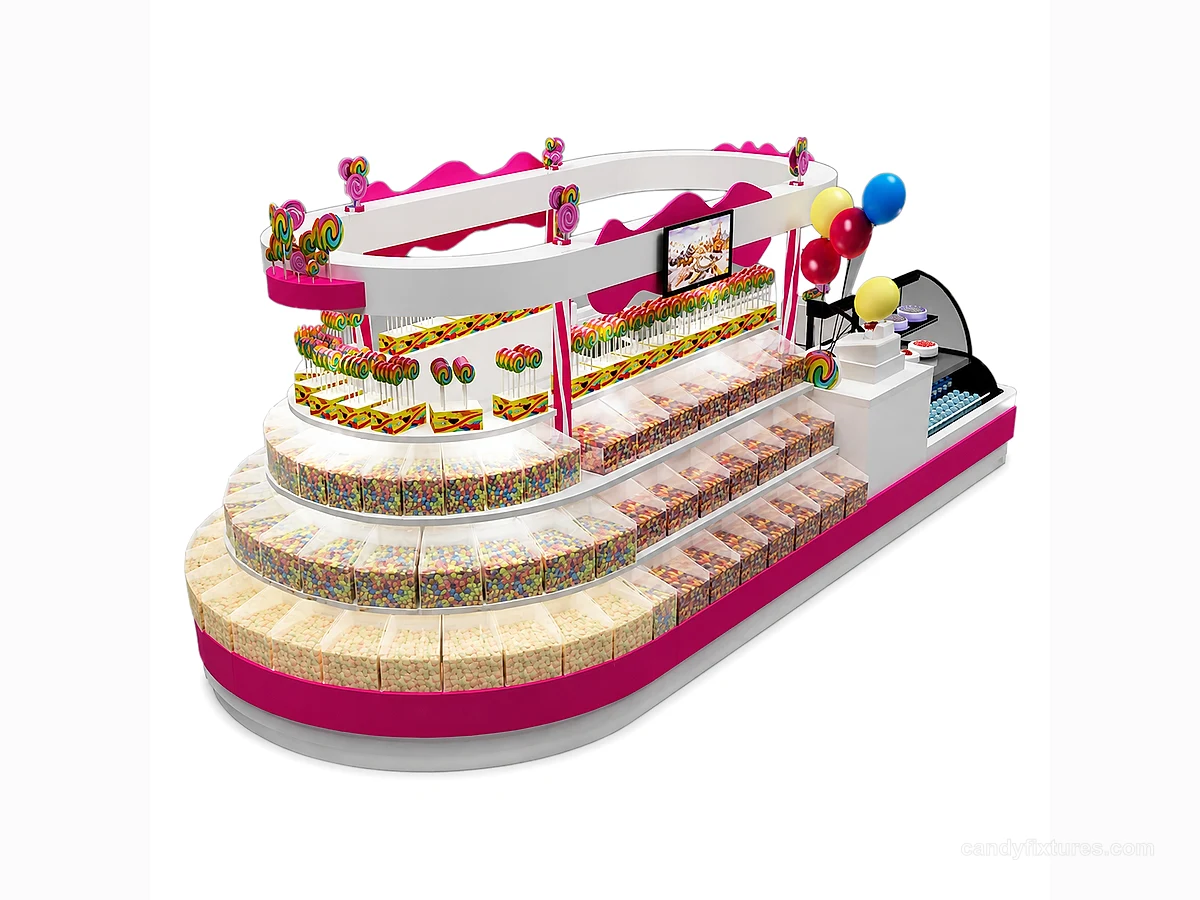
A practical opening plan for first-time candy store owners, covering the business model, site, customer flow, fixtures, food-safety checks and the steps needed before requesting a quotation.
Start with the store model, not the furniture
If you are learning how to open a candy store, the first decision is not which display cabinet to buy. It is the type of shopping experience you want to operate. A neighborhood candy shop, a mall kiosk, a bulk-candy destination and a premium gift store can all sell sweets, but they need different footprints, staffing routines, product mixes and display priorities.
Write the concept in one sentence before you speak with a designer or fixture supplier. For example: a 400-square-foot shop for family browsing and pick-and-mix candy; a compact mall kiosk for high-visibility impulse purchases; or a premium candy and gift store with packaged products and seasonal collections. This sentence becomes a filter for every later choice.
A useful opening plan connects four decisions: who the shopper is, what the shopper is buying, how the shopper moves through the space and how the staff replenishes the products. If those decisions are vague, a beautiful fixture can still create slow service, hidden merchandise or expensive changes during production.
Turn the idea into a one-page opening brief
Before you compare locations, prepare a short brief that another person can understand without a meeting. Include the target customer, expected store type, approximate area, opening date, product categories, service method and the visual character you want. Add reference images only when they communicate a real requirement such as a color, a display height or a type of customer access.
The brief should also separate confirmed information from assumptions. A lease dimension is confirmed; an estimated daily customer count is an assumption. A landlord rule about signage is confirmed; a preferred checkout position is a design preference. Keeping these apart helps the designer protect the plan when one assumption changes.
The U.S. Small Business Administration describes a business plan as a tool for explaining how a business will operate and why it is a reasonable investment. Your store-opening brief is not a replacement for financial planning, but it gives the financial plan a physical operating model to test.
- Store format: full shop, mall kiosk, pop-up or mixed candy-and-dessert concept.
- Product mix: packaged candy, bulk candy, gifts, drinks, ice cream or seasonal items.
- Customer action: browse, scoop and weigh, choose a gift, order at a counter or collect a pre-packed item.
- Operating limits: lease footprint, delivery access, power, water, storage and staffing.
- Brand direction: color palette, sign visibility, photo moment and the level of customization required.
Choose the site by customer flow and daily work
A high-traffic location does not automatically make a good candy store. You need to understand how shoppers approach the entrance, where they pause, which side has the strongest visibility and how staff can receive stock without cutting through the customer path. Walk the site at different times of day and record the real conditions instead of relying on a single landlord plan.
Measure the usable selling area separately from the total leased area. Columns, low ceilings, fire equipment, doors, service counters and landlord-defined circulation can remove space from the display plan. Record the entrance width, delivery route, ceiling height and any fixed services before requesting detailed shop drawings.
For a mall kiosk, sightlines from several directions often matter more than a conventional storefront. For a small shop, a wall-led layout may create more usable display length than a crowded central island. For a destination store, a feature fixture can be placed deeper inside to give shoppers a reason to move through the space.
| Decision | What to confirm | Why it affects the quote |
|---|---|---|
| Footprint | Usable length, width, height and fixed obstacles | Determines fixture count, modules and delivery size |
| Assortment | Packaged, bulk, gift, drink or dessert categories | Determines shelves, bins, counters and service zones |
| Service | Self-service, scoop-and-weigh, POS or assisted sale | Determines counter depth, equipment and staff access |
| Branding | Colors, graphics, logo and feature elements | Determines finish, lighting and fabrication details |
| Installation | Delivery route, assembly window and landlord rules | Determines packing, modules and installation planning |
These are planning questions, not fixed construction standards. Final dimensions must be checked against the site and local requirements.
Plan four operating zones before selecting fixtures
Most candy stores need four connected zones: an attraction zone, a browsing and display zone, a service or checkout zone and a reserve-stock zone. The zones do not need to be separated by walls. They need to be separated by purpose so customers understand what to do and staff can keep the store replenished.
The attraction zone is the first visual message. It may be a colorful kiosk, a seasonal table, a large candy sculpture or a clear window display. Keep it focused. If every product competes for attention, the store has no starting point and the most profitable collection can disappear into visual noise.
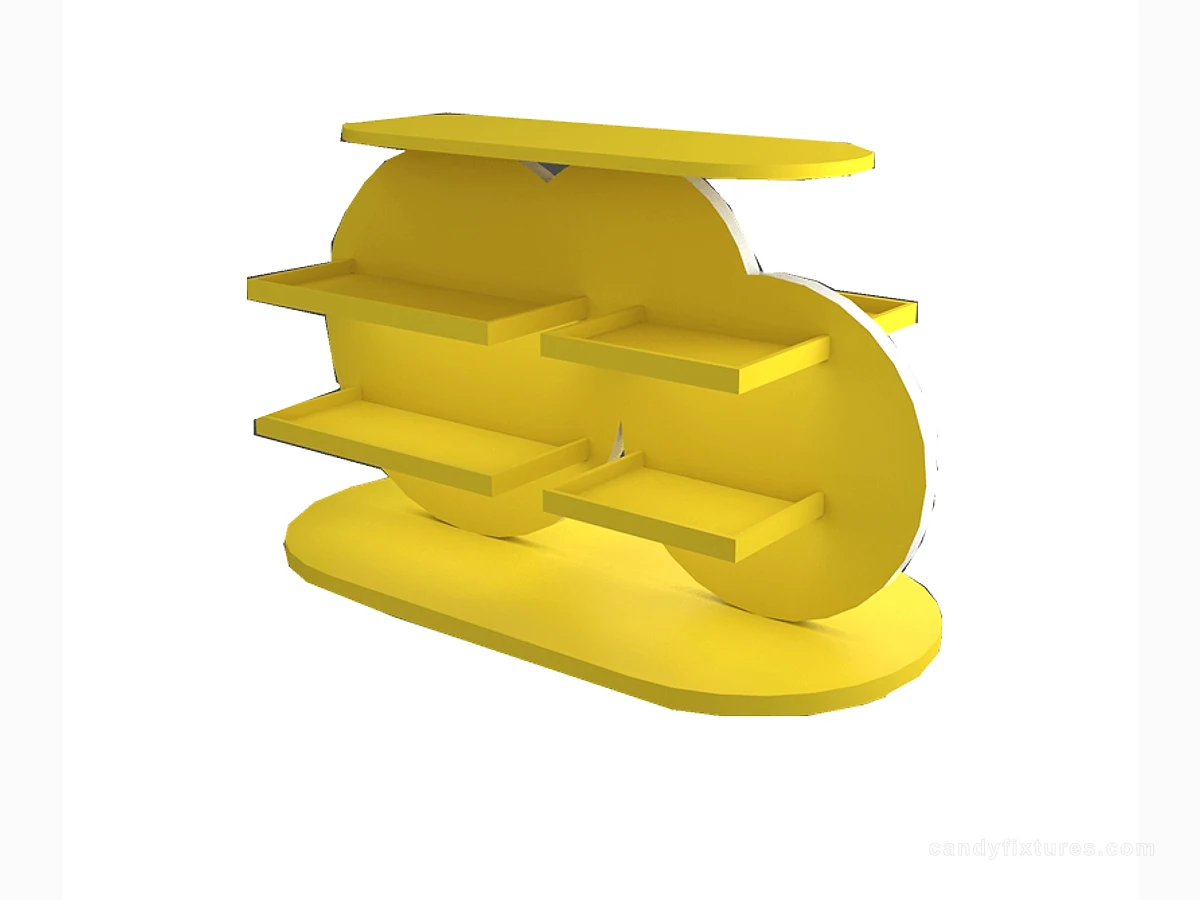
The browsing zone carries the core assortment. Use wall displays, gondolas, display racks, bins and cabinets according to how customers choose each product. Packaged candy benefits from clear grouping and easy front-facing visibility. Bulk candy needs container access, labels, scoops or tongs and a way to refill without blocking shoppers.
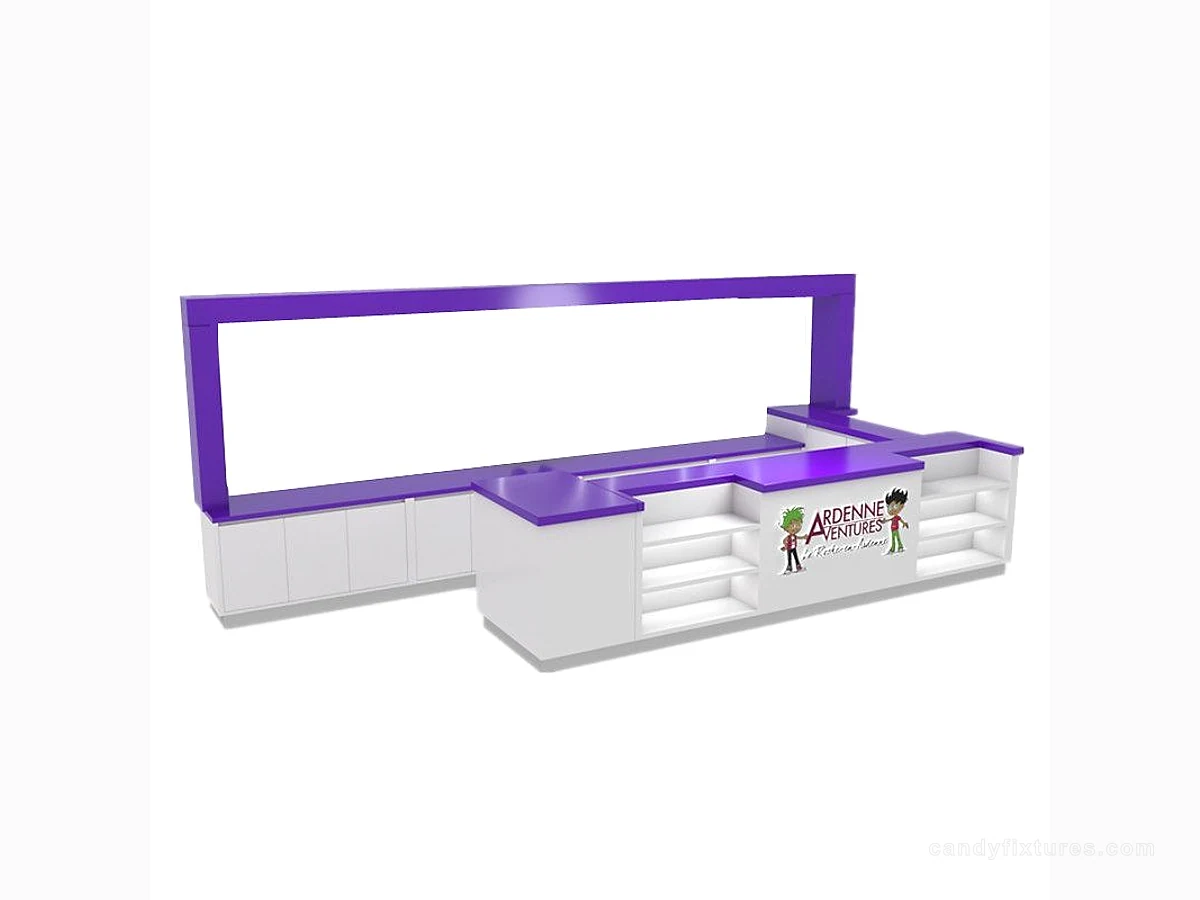
The service zone needs enough room for the actual transaction, not only the cash register. Include bagging, weighing, gift wrapping, order handoff and short-term queueing where those activities apply. The reserve-stock zone should be close enough to replenish quickly but not so visible that boxes become part of the customer experience.
- Use the strongest sightline for the seasonal or signature product, not for low-priority storage.
- Keep the first decision simple: customers should quickly understand whether to browse, scoop, order or ask for help.
- Place fast-moving products where staff can replenish them without carrying cartons through the main customer path.
- Leave a clear route for cleaning, opening doors, servicing equipment and responding to an emergency.
Select fixtures after the assortment is defined
A common opening mistake is choosing a fixture because it looks attractive in a photograph and then trying to force the product mix into it. Start with a simple product map: category, package size, selling method, expected stock depth, refill frequency and visual priority. That map tells you whether you need adjustable shelves, clear bins, drawers, a counter, a display table or a custom feature unit.
Custom fixtures are most useful when they solve a real store constraint. A themed kiosk can make a mall footprint memorable, while a service counter can organize the transaction and provide hidden reserve storage. A wall cabinet can use vertical space, but it still needs a practical refill route and a height that works for the intended shopper.
Use existing product references as conversation starters, not as a promise that the same dimensions will fit your location. The product pages on this site describe the visible concept and the customization direction; the final quotation should be based on the approved layout, product list, finish, access conditions and installation plan.
Build the budget around decisions that cause rework
A useful first budget separates the store into site costs, fixtures, equipment, stock, branding, delivery, installation and opening marketing. The exact amounts will vary by location and concept, but the order of decisions matters. Confirm the footprint and operating model before requesting a detailed custom-fixture price; otherwise, the quotation may change when the product mix or service method changes.
Ask suppliers to identify what is included and what is not. A fixture price may not include delivery to the final address, unloading, installation, lighting connection, graphics, equipment or local compliance work. A clear scope protects both sides and makes two quotations easier to compare.
Do not use a product photograph as a substitute for a drawing. The photograph shows appearance, while the drawing confirms dimensions, modules, finishes, service openings, electrical positions and installation access. Those details are the basis for a more reliable production and delivery discussion.
| Budget group | Questions to answer | Typical evidence |
|---|---|---|
| Site and fit-out | What does the lease or landlord require? | Lease plan, site rules and contractor scope |
| Fixtures | Which units are standard, modified or fully custom? | Layout, elevations, finish samples and quotation |
| Equipment | What is needed for weighing, POS, refrigeration or packaging? | Equipment list and utility requirements |
| Stock | How much opening inventory and reserve stock is needed? | Assortment list, pack sizes and replenishment plan |
| Delivery and installation | How will modules enter and be assembled? | Delivery route, packing plan and installation window |
Add food-safety and accessibility checks early
Candy retail may look simple, but the store can still involve unpacking, bulk handling, scoops, containers, cleaning routines and local food rules. The FDA Food Code is a model used by food-control jurisdictions; it is not a universal substitute for the rules in the city, state or country where the store will operate. Confirm the applicable requirements with the local authority before finalizing the service and container layout.
For bulk candy, plan how products are protected, labeled, refilled and cleaned. For packaged candy, plan how cartons are received and stored without blocking customer-facing areas. If the concept includes ice cream, drinks or prepared food, the equipment and regulatory discussion becomes broader than a dry-candy shop and should be treated as a separate workstream.
Accessibility should also be part of the first layout conversation. The 2010 ADA Standards describe accessible routes and clear paths for covered facilities in the United States, but local requirements may differ and may apply differently depending on the project. Do not wait until the end to discover that a display island, queue or service counter interrupts the intended route.
Use a simple pre-opening sequence
Once the concept, site and product map are clear, move through the project in a fixed order. First confirm the site measurements and operating requirements. Next produce a rough zoning plan. Then select or adapt fixture concepts. After that, approve the detailed drawing, finishes, graphics and equipment positions before fabrication. Finally, confirm packing, delivery access and installation responsibilities.
This sequence is slower than choosing furniture immediately, but it is faster than changing a fixture after production. It also gives the supplier useful information: which details are essential, which are flexible and which need a local contractor or equipment specialist.
- Site survey: dimensions, entrances, fixed services, landlord rules and delivery route.
- Merchandise map: categories, package sizes, display priority and refill frequency.
- Concept layout: attraction, browsing, service, storage and customer circulation.
- Fixture brief: selected references, target dimensions, finishes, graphics and lighting.
- Approval pack: final drawing, quotation scope, production approval and installation plan.
Common mistakes first-time owners can avoid
The most expensive mistakes are usually planning mistakes rather than material mistakes. Owners may overfill the floor, underestimate reserve storage, place the checkout where it interrupts browsing or specify a feature unit before checking delivery access. These problems are difficult to solve once the store is already in production.
Another mistake is treating every part of the store as equally important. A strong concept has a visual hierarchy: one or two memorable features, a clear core assortment, easy-to-understand service points and quiet storage. The store can be colorful without being confusing.
Finally, avoid publishing a design promise that the project cannot support. A custom fixture should be presented as a starting concept until the site, dimensions, materials and installation details are approved. That keeps the sales conversation accurate and leaves room for a better final solution.
Related products and planning pages
Boat Shape High-end Shopping Mall Candy & Ice Cream Kiosk CustomCandy display counter used in retail stores & malls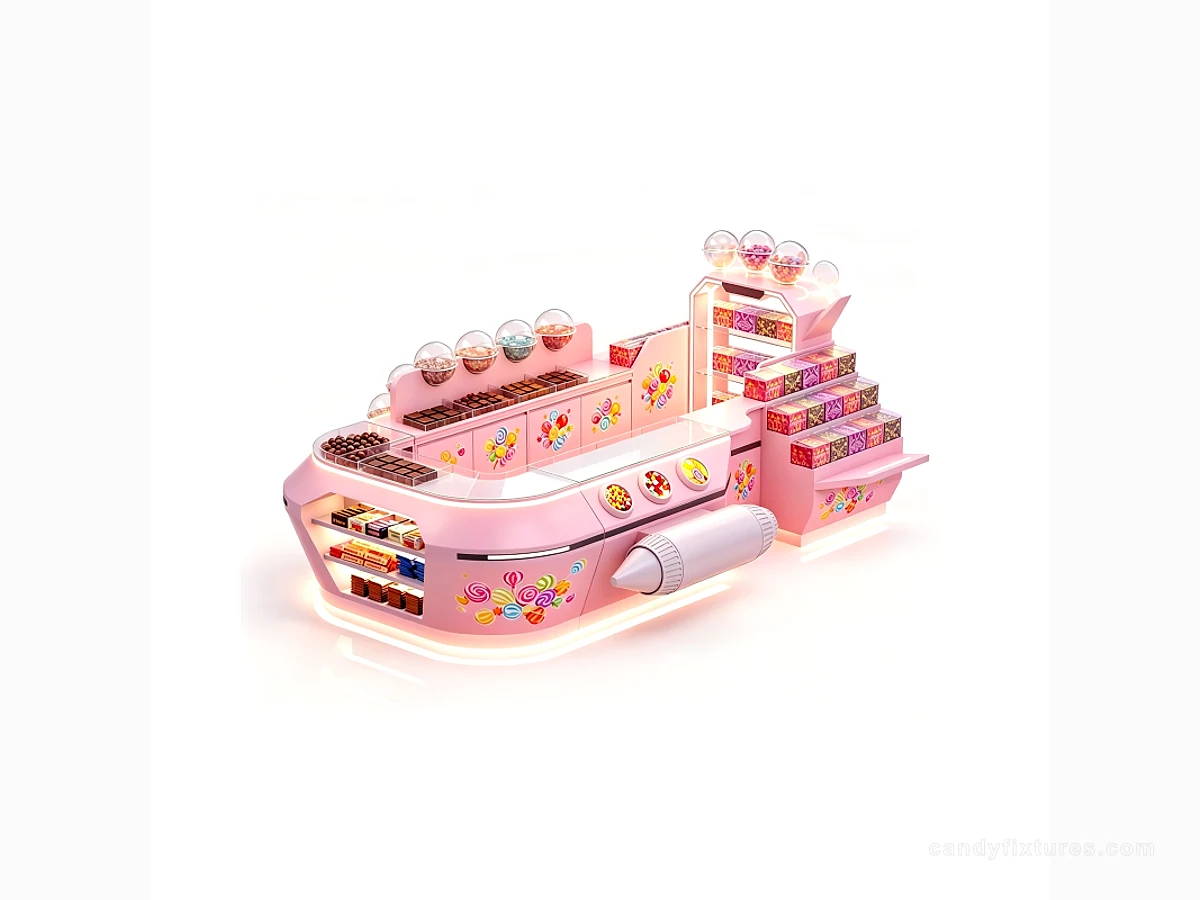 Candy Boat Kiosk Pink Candy Counter Sweet Retail Store Bar Candy Spaceship Display
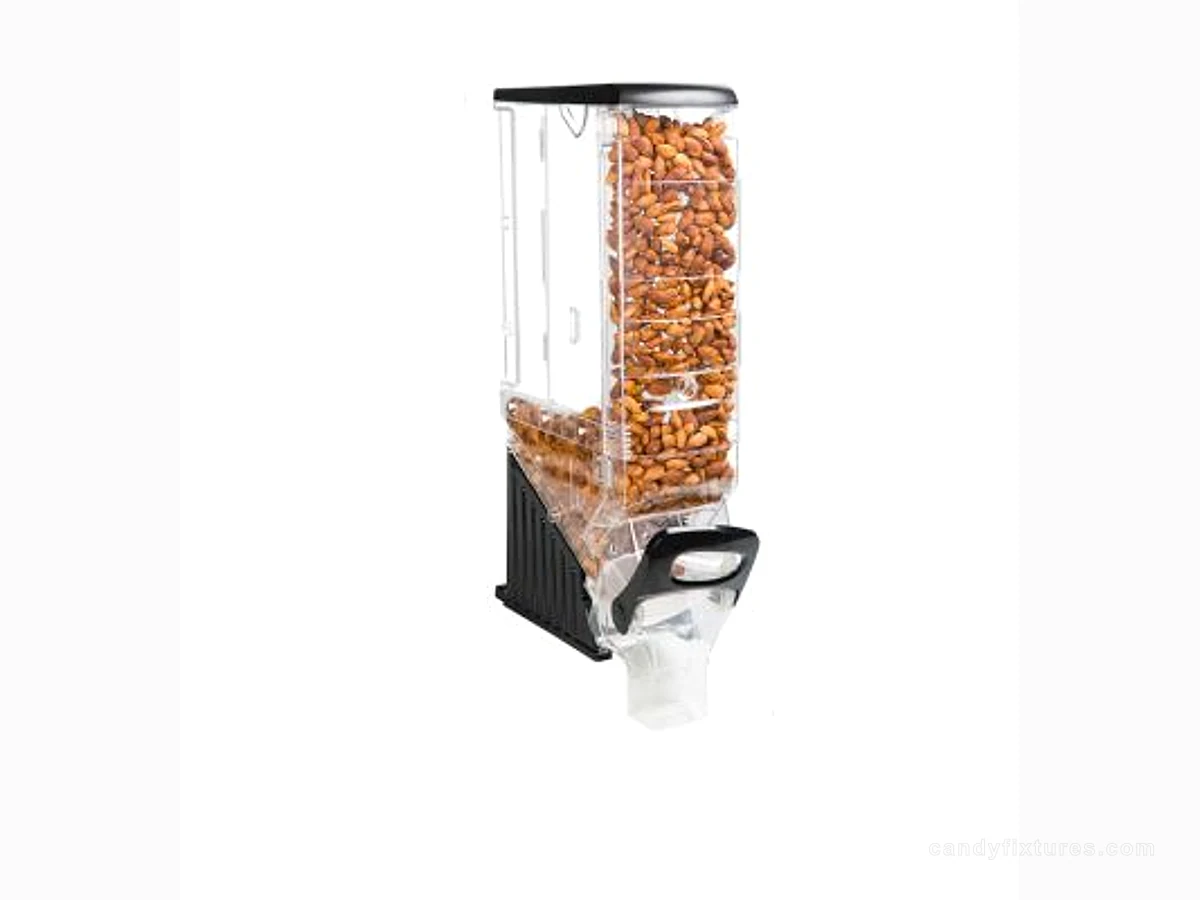 Supermarket Candy Store Wall-mounted Dispenser Nuts Bulk Candy Drop-down High Transparent Gravity Food BoxCandy store design serviceSee the broader design and project-planning service.Candy store layout guideContinue with circulation, display zones and replenishment planning.
Frequently asked questions
How much space do I need to open a candy store?
There is no single minimum that works for every concept. A mall kiosk, a compact shop and a destination store have different customer-flow and storage needs. Start with the assortment, service method and required routes, then test the layout against the actual usable footprint.
Should I choose standard or custom candy store fixtures?
Use standard or modular units when they fit the assortment and space. Choose custom work when the footprint, brand shape, customer flow, service counter or feature display needs a coordinated solution. The decision should come from the operating brief, not only from appearance.
What should I send a fixture supplier for a quotation?
Send the site plan or measurements, product categories, preferred display method, target opening date, reference images, finish direction, equipment needs and delivery or installation constraints. The more of these details are confirmed, the more useful the quotation will be.
When should I finalize the candy store layout?
Finalize the functional layout before approving custom production. Keep enough time afterward for drawing review, finish confirmation, packing, delivery and installation coordination.
Sources and further reading
- U.S. Small Business Administration — Write your business planUsed for the distinction between an operating concept and a broader business plan.
- U.S. Food and Drug Administration — FDA Food CodeUsed to explain that the Food Code is a model and local authorities determine applicable rules.
- ADA.gov — 2010 ADA Standards for Accessible DesignUsed for the recommendation to review accessible routes during layout planning.
Regulatory requirements vary by location. Confirm the final layout, food handling and accessibility requirements with the relevant local professionals before construction or opening.