
Candy Dispensers for Retail Stores: How to Plan a Clean, Easy-to-Shop Bulk Station
A practical guide to choosing and arranging candy dispensers for retail stores, with attention to customer use, labels, refill access, cleaning and product visibility.
Start with the portion action
Candy dispensers for retail stores are not only storage containers. They shape the moment when a shopper chooses a product and takes a portion. The dispenser should show what is inside, make the action understandable, reduce unnecessary handling and fit the way the store prices and weighs the candy.
Before choosing a model, decide whether customers will use a lever, scoop, door, lid or staff-assisted service. Then map what happens immediately afterward: where the candy goes, how the price is calculated, where the label is read and how the customer reaches payment. A dispenser that works well in isolation may be awkward when connected to the rest of the transaction.
The staff side must be planned at the same time. Refilling, cleaning, stock rotation and damaged-product handling should not require staff to reach across customers or remove several neighboring containers. Good dispenser planning makes the routine repeatable across shifts.
Compare gravity dispensers, scoop bins and jars
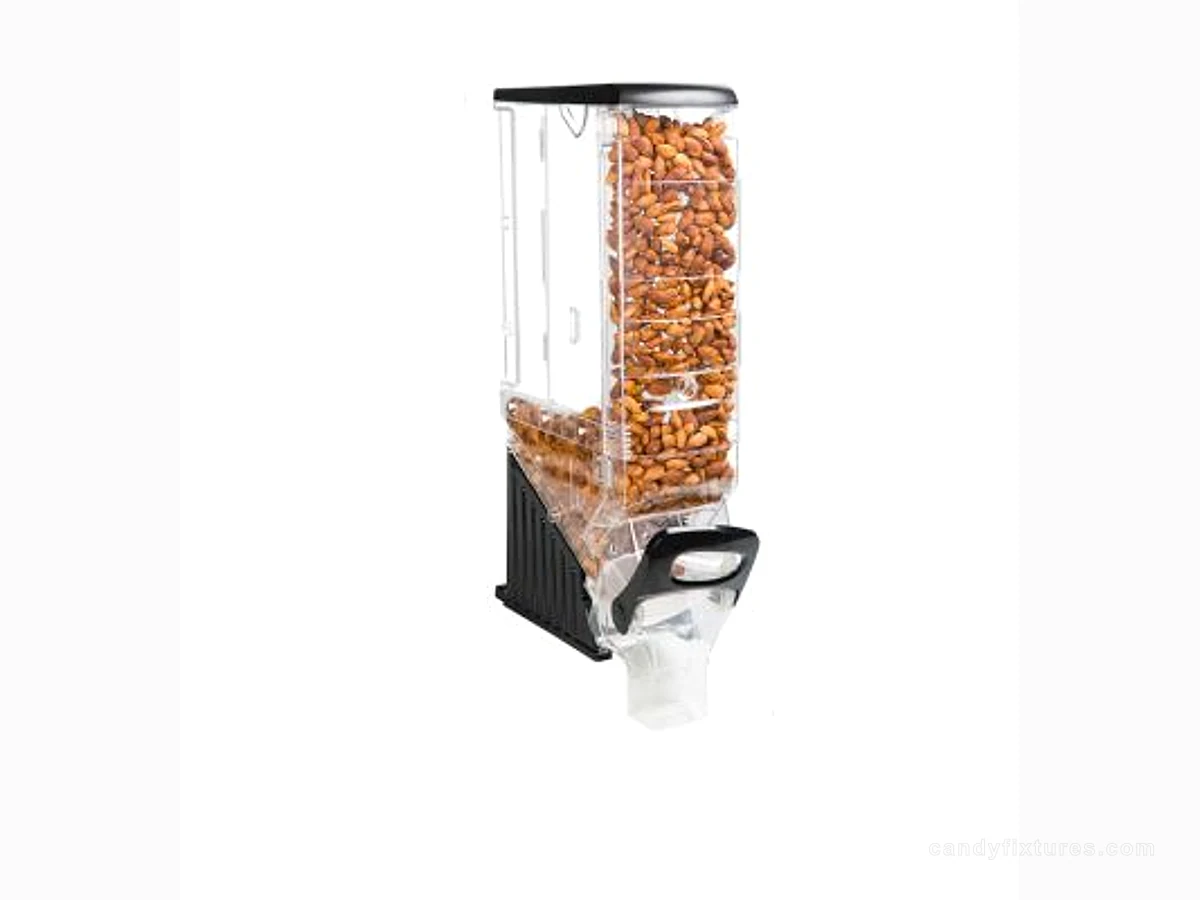
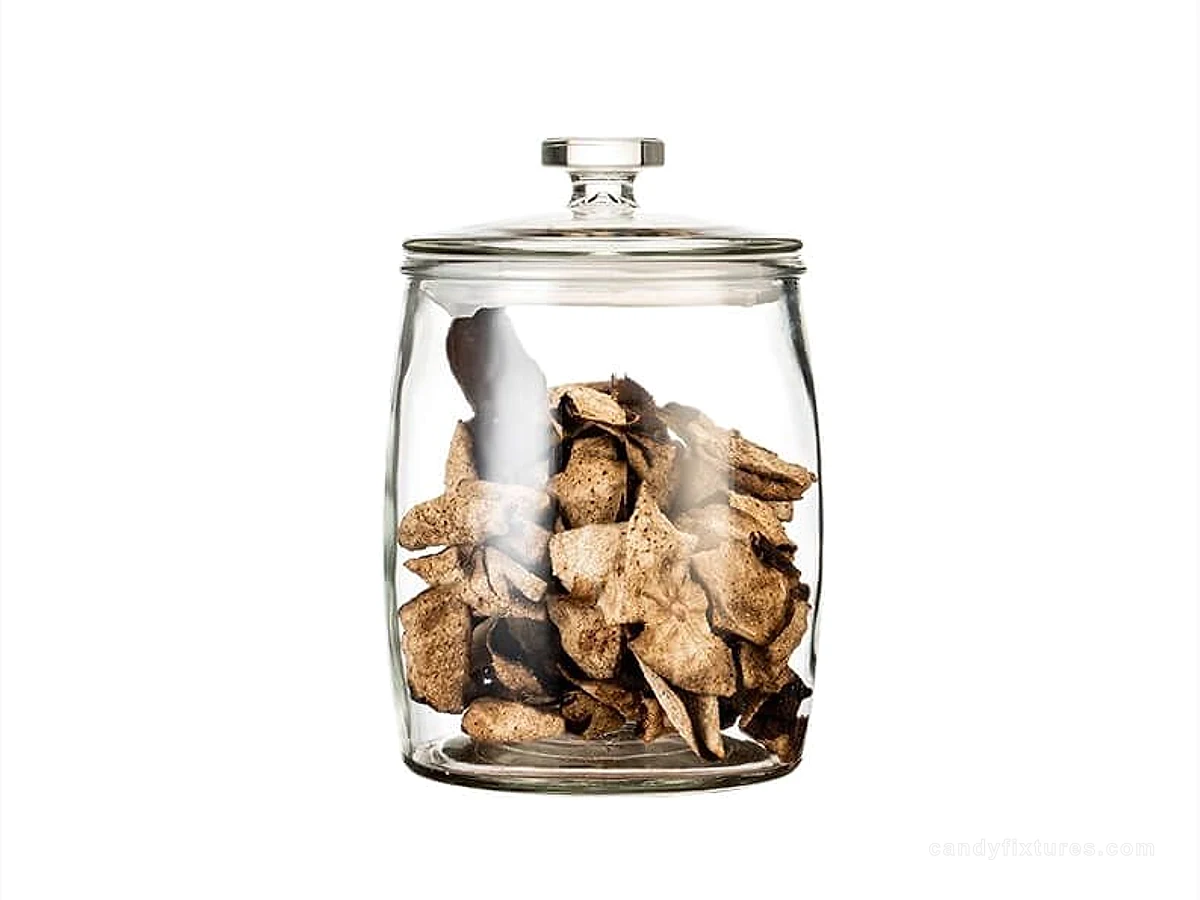
Gravity dispensers can make a controlled portion action visible and can use wall height efficiently. Scoop bins give customers a more flexible pick-and-mix action and can display a larger opening surface. Jars can create a softer or more premium presentation and may suit a different product group or service method.
The best choice depends on product size, flow behavior, portion accuracy, cleaning access and the expected speed of the station. Do not choose a dispenser only because it holds a large volume. The customer must still be able to identify the product and complete the action without confusion.
If the store sells both self-service bulk candy and packaged products, use the dispenser station as a distinct category. Clear separation helps shoppers understand which products are sold by weight or portion and which are sold as sealed units.
| Option | Strength | Check before ordering |
|---|---|---|
| Gravity dispenser | Visible, repeatable portion action and good wall use | Outlet control, product flow and refill access |
| Scoop bin | Flexible pick-and-mix behavior and broad product visibility | Scoop storage, label position and cleaning routine |
| Jar or canister | Gift-style presentation and slower browsing rhythm | Lid access, handling and product rotation |
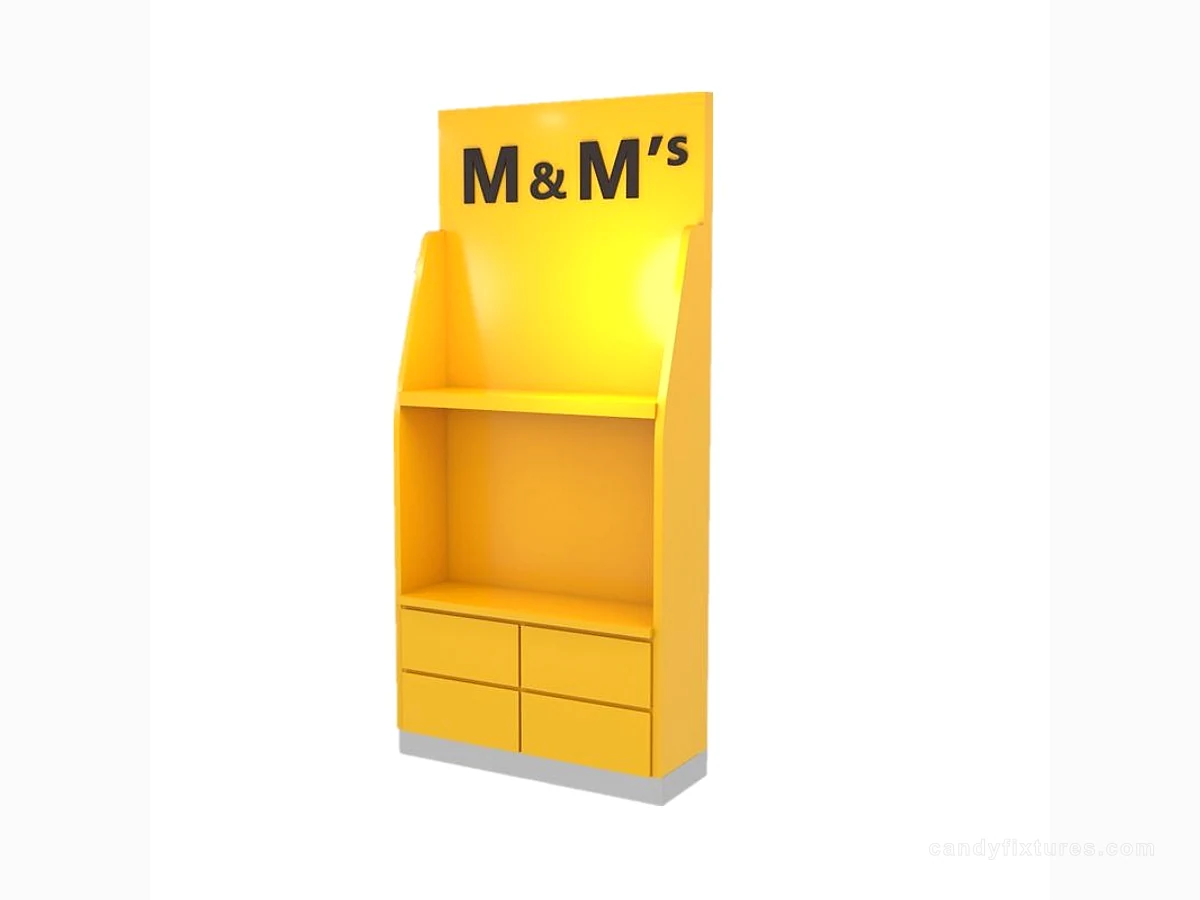
| Dispenser cabinet | Combines containers, display frame and reserve storage | Cabinet depth, staff side and service equipment |
Place dispensers at a comfortable decision height
A dispenser wall needs more than an attractive grid. The most important products should be easy to see and reach, while the overall arrangement should remain readable from the entrance. Avoid placing labels above the normal sightline or putting fast-moving products in locations that force customers to bend, stretch or cross another person.
Use a clear order for the dispenser sequence. The rule may be flavor, texture, color, product family or price band, but it should be visible through signs and grouping. Keep similar-looking products separated enough that customers can identify them without opening every container.
For a children's or family-oriented store, review reach, supervision and spill risk as part of the layout. For a premium store, review the visual rhythm, materials and lighting so the dispenser station feels integrated rather than like a separate utility wall.
- Place the most important labels beside the matching dispenser, not in a distant header.
- Use a consistent product order so staff can refill the station without guessing.
- Keep the customer action visible from the main approach direction.
- Leave space for bags, scoops, labels and a temporary queue without blocking the main route.
Build cleaning and refill into the cabinet
The FDA Food Code is a model for retail food protection, while the final rules for a project come from the applicable local authority. Use that distinction when planning dispensers: the product, container, serving utensil, surrounding surface and refill process all need a practical cleaning and handling routine.
Plan for the moments when the station is not perfect. A container may be empty, a scoop may need replacement, a label may change or a product may need to be removed. If the fixture has no accessible service side, staff may postpone the work and the display will lose consistency.
A cabinet with drawers or closed storage can help keep bags, labels and reserve stock close to the station. It should not become a hidden accumulation point for cartons. Mark the storage role and keep the customer-facing surfaces clear.
Connect the dispenser to the payment step
Customers need to know what happens after they use the dispenser. If the product is weighed, show the route to the scale and label step. If the product is charged by scoop or portion, make that method visible. If staff completes the portion, place the dispenser where the handoff feels natural.
The service counter should not be so far away that customers carry open bags through the entire store. It should also not be so close that the dispenser station becomes part of the checkout queue. Test the route with a full bag, an empty bag, a child shopper and a staff refill action.
The accessibility review should include the dispenser and the service point together. ADA.gov describes accessible routes and walking surfaces for covered facilities in the United States; the exact requirements depend on location and project scope. Keep the intended path continuous and ask local professionals to confirm the final design.
Use the dispenser wall as merchandising, not only storage
A dispenser wall can help customers compare products and discover combinations. Group a strong-selling core beside a new product, seasonal flavor or premium item, but keep the grouping clear enough that the display does not feel random. Use one or two visual anchors rather than decorating every container.
Lighting should support reading and product color without creating glare on clear surfaces. Signage should identify the category and the selling method. If the wall is part of a larger candy store, connect its finish and graphics to the racks, counters and feature fixtures nearby.
Measure the display by more than how full it looks. Track which products are noticed, which are refilled often, where customers ask questions and where the station becomes crowded. Those observations can guide the next container arrangement.
Prepare the purchasing and installation brief
A good dispenser brief includes the product list, container approach, portion method, label system, cleaning routine, customer route, staff route, reserve storage, finish, lighting and site measurements. It also identifies which parts are fixed and which can be adjusted after testing.
Ask the supplier to provide the customer-facing view and the service-side view. Confirm how the modules are packed, how they enter the store and what installation work is required. For a wall-mounted design, confirm the wall condition and local installation responsibility before approving production.
The final goal is a dispenser station that remains easy to shop and easy to maintain during a busy day. A clear operating brief is more valuable than a generic promise of capacity or a photograph without dimensions.
Related products and planning pages
Supermarket Candy Store Wall-mounted Dispenser Nuts Bulk Candy Drop-down High Transparent Gravity Food BoxCandy Dispenser Display Cabinet Back-to-Wall Retail Showcase With Drawers Candy Boat Kiosk Pink Candy Counter Sweet Retail Store Bar Candy Spaceship Display
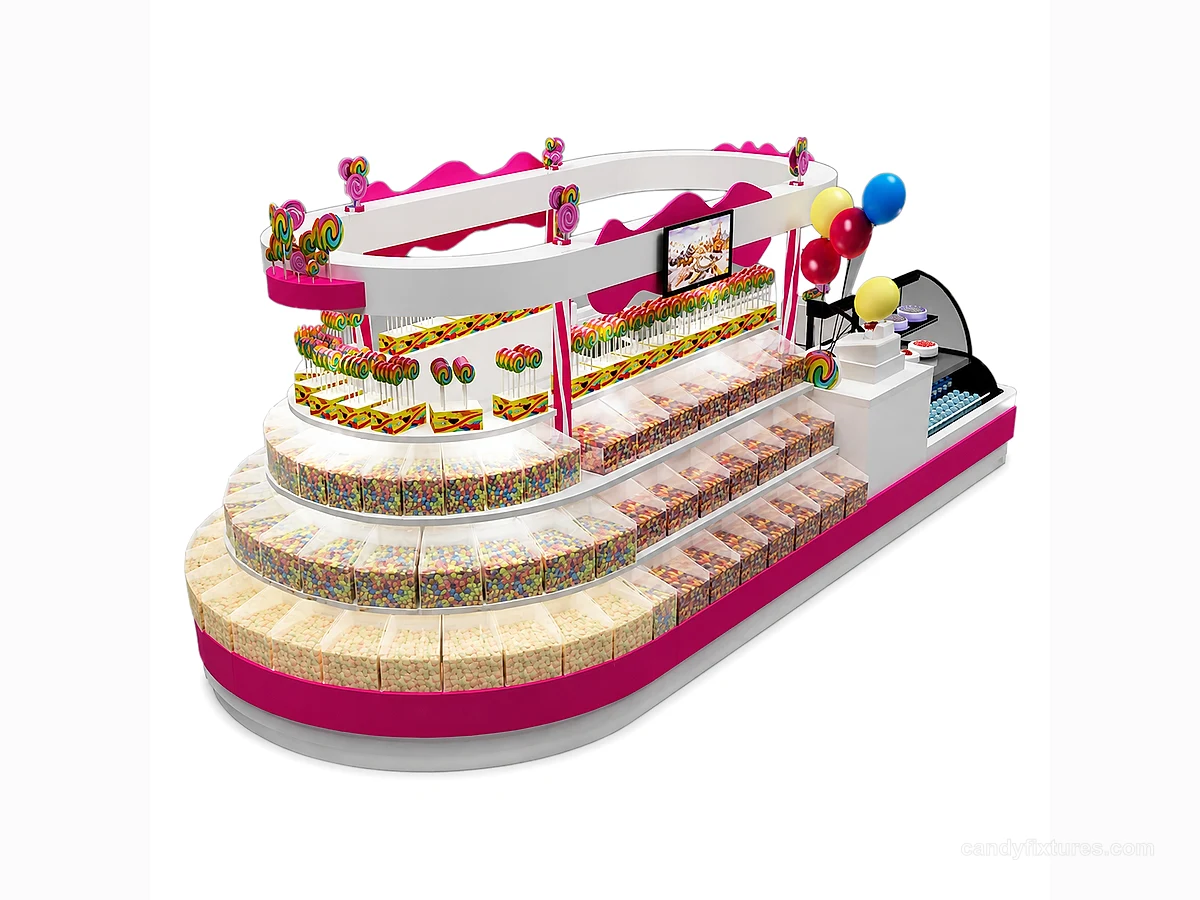 Boat Shape High-end Shopping Mall Candy & Ice Cream Kiosk CustomBulk candy display binsCompare bulk bins, labels and refill planning.Candy store display fixturesConnect the dispenser station to the wider fixture system.
Frequently asked questions
What should I consider when buying candy dispensers for a retail store?
Consider the product, portion method, customer reach, labels, cleaning access, refill routine, payment step, available wall or floor space and local food-handling requirements.
Are gravity dispensers better than open candy bins?
Neither is universally better. Gravity dispensers can make the portion action repeatable and use wall height, while open bins offer flexible pick-and-mix access. Choose based on the product and operating routine.
How do I keep a candy dispenser station organized?
Use a consistent product order, place labels beside the matching container, keep a separate refill route, store supplies close to the station and record a simple refill and cleaning routine.
Can candy dispensers be built into a custom cabinet?
Yes. A cabinet can coordinate dispensers with reserve storage, labels, lighting and the surrounding retail display. The final dimensions should be based on the site, containers and service equipment.
Sources and further reading
- U.S. Food and Drug Administration — FDA Food CodeUsed for local review of retail food handling, cleaning and serving routines.
- ADA.gov — 2010 ADA Standards for Accessible DesignUsed for the recommendation to include the dispenser and payment route in accessibility review.
Regulatory requirements vary by location. Confirm the final layout, food handling and accessibility requirements with the relevant local professionals before construction or opening.