
Bulk Candy Display Bins: A Practical Guide to Layout, Hygiene and Refill
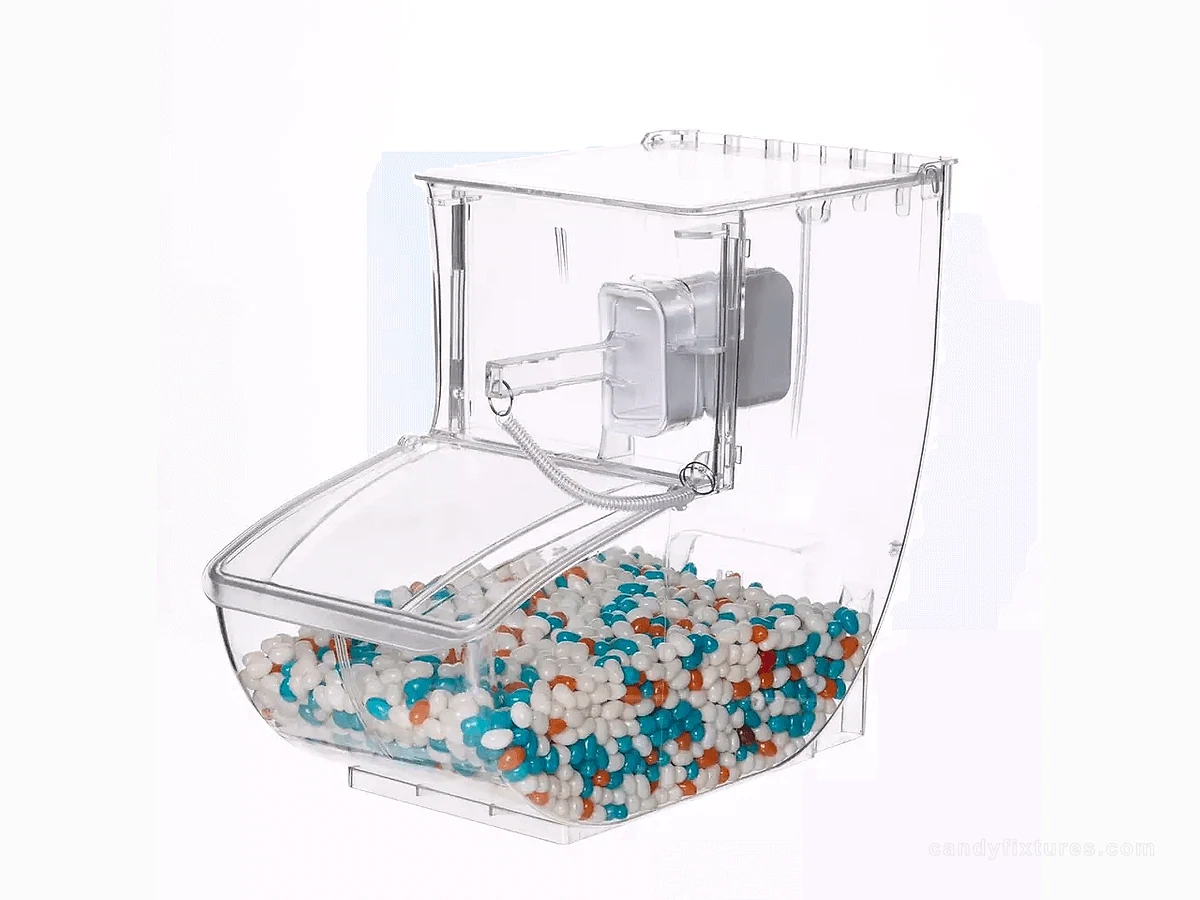
How to plan bulk candy display bins so shoppers can see, choose and serve products easily while staff can label, clean and refill the station efficiently.
Make the bulk station easy to understand
Bulk candy display bins work when a shopper can understand the full action without asking for help: choose a product, read the name or price, take the correct amount, place it in a bag or container and bring it to the service point. The display should make those steps feel natural rather than turning the station into a puzzle.
Start with the customer side of the station. Decide whether shoppers stand in front of a wall, move along a counter, approach a freestanding island or use a scoop-and-weigh table. Then place bins at a comfortable reach and keep labels close enough that the name and price are not separated from the product.
The staff side is equally important. Refill access, cleaning, stock rotation and damaged-product removal need a clear route. A station that looks attractive from the customer side but requires staff to dismantle it every day will create unnecessary work and inconsistent presentation.
Choose a container style by the product and service method
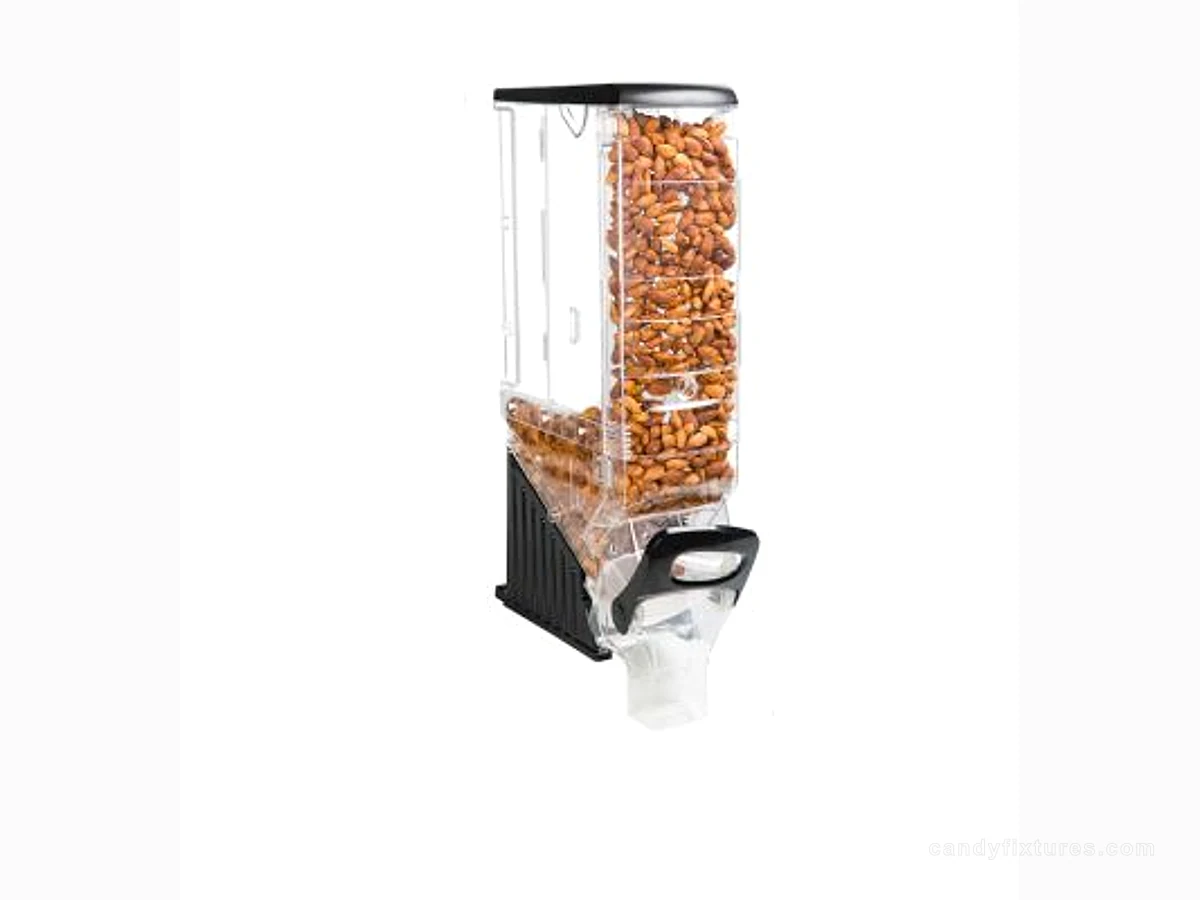
Clear bins are useful when the product needs to be seen from above or from the front. Gravity dispensers can make a controlled portion action visible and fast. Jars or lidded containers can suit products that need a different access or a more gift-oriented presentation. There is no single best container for every candy category.
Match the container to the product texture, portion method, refill frequency and cleaning routine. The product should flow or scoop without unnecessary handling, and staff should be able to remove the container or access the refill opening without disturbing the neighboring products.
If the store sells by weight, coordinate the bin layout with the scale, bags, labels and payment step. If the store sells pre-priced portions, make the unit price and container action obvious. The container is part of the selling process, not an isolated accessory.
| Container approach | Useful for | Planning check |
|---|---|---|
| Open clear bin with scoop | Pick-and-mix candy and visual variety | Can the scoop, label and cleaning access stay controlled? |
| Gravity dispenser | Fast self-service portions and vertical display | Is the outlet easy to use and refill without reaching over customers? |
| Lidded jar or canister | Gift-style display or products needing a different access method | Can staff open, clean and rotate stock efficiently? |
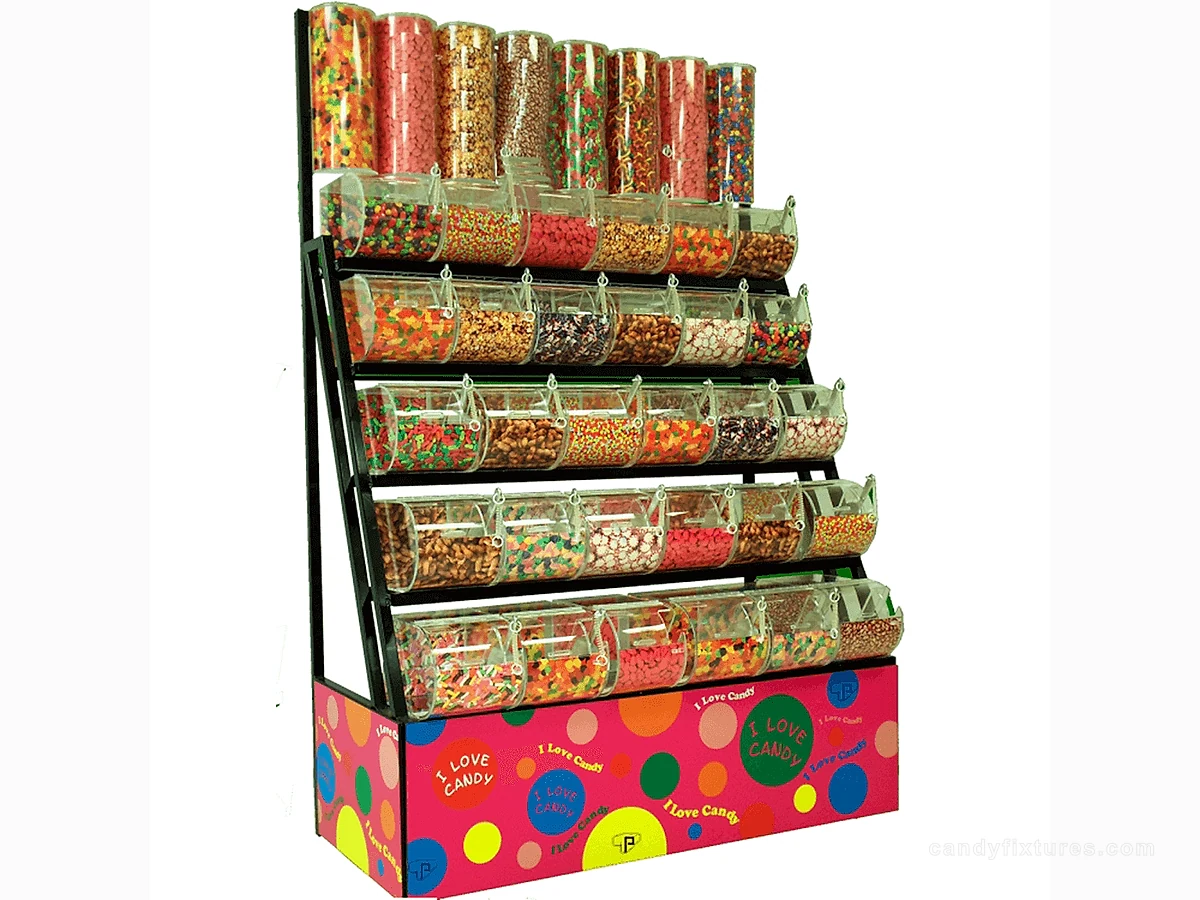
| Bin rack system | Many related products in one station | Are the labels, product order and refill route easy to maintain? |
| Countertop container | Small footprint, checkout or promotional display | Will it reduce service space or block the cashier's work? |
Design the station around labels and pricing
A beautiful wall of candy loses value when customers cannot tell products apart or understand how they are priced. Create a consistent label position before deciding the final bin spacing. Labels may need the product name, price method, allergen or ingredient information and a short instruction for the scoop or dispenser.
Keep the label attached to the correct container and readable from the normal standing position. Avoid placing one long sign above multiple bins when the order can change or the products are visually similar. A modular label system makes seasonal changes and assortment updates easier.
If the store has both packaged and bulk candy, make the pricing methods visually distinct. Customers should not have to guess whether a number is a per-piece price, a per-weight price or a packaged unit price. Clear communication improves the experience and reduces staff interruptions.
- Use a repeatable label position across the entire station.
- Keep the product name and price method beside the matching bin.
- Use color or category grouping only when it remains clear after the assortment changes.
- Leave space for temporary labels during seasonal or promotional campaigns.
Treat cleaning and food handling as layout decisions
The FDA Food Code is a model used by food-control jurisdictions for retail and food-service operations. It does not replace the local rules for a particular store, but it is a useful reminder that a bulk station needs a real food-handling and cleaning plan rather than only a visual concept.
Decide how containers, scoops, lids, labels and surrounding surfaces will be cleaned. Decide where replacement utensils or clean containers are stored. Decide how staff will isolate a product if a container is damaged or contaminated. These decisions may change the counter depth, access doors, storage drawers or station location.
Keep cartons and reserve stock away from the customer-facing surface. Refill in a way that protects the product and keeps the station orderly during busy periods. If a local authority or food-safety professional provides a project-specific requirement, update the drawing before fabrication.
Place the station without blocking the store
Bulk candy attracts attention, so it can easily become an accidental queue. Place the station where shoppers can browse without stopping directly inside the entrance. Leave enough room for customers to compare products, fill a bag and move toward payment without standing across the main route.
For a wall-mounted station, check that the display does not reduce the usable route or create a difficult corner. For a freestanding rack, draw the customer approach and the staff refill side separately. For a countertop display, protect the transaction surface so the bulk station does not compete with the cashier's work.
The layout should also be reviewed for accessibility and comfort. ADA.gov describes accessible routes and walking surfaces for covered facilities in the United States; exact obligations depend on the project location and scope. As a practical check, keep the intended path continuous and avoid placing loose scoops, cartons or promotional props where they narrow the route.
Plan refill, stock rotation and seasonal change
Refill frequency should influence the container order. Put fast-moving products where staff can reach them quickly and where a low level is easy to notice. Keep slow-moving or seasonal products flexible so the station can change without leaving awkward gaps.
Create a refill list that records the product, container position, reserve location and any special handling note. The list does not need to be complicated. Its purpose is to make the station consistent across shifts and to reduce the chance that a product is placed in the wrong bin.
A modular rack can make the station easier to refresh, but only if the labels, containers and support surfaces are coordinated. Confirm whether bins can be removed individually, whether the shelf spacing can change and whether the back or top of the rack is reachable for staff.
Prepare the supplier brief
For a bulk candy bin quotation, send the site measurements, product list, serving method, label direction, expected refill routine, finish preference, lighting needs and delivery constraints. Include a photograph or reference for the visual direction, but do not rely on it as the final specification.
Ask the supplier to show the customer side and staff side of the station. Confirm the number and type of containers, access for cleaning, reserve storage, service position and the modules used for delivery. If the station is part of a larger shop, include the layout so the supplier can check sightlines and circulation.
A well-defined brief reduces last-minute changes and helps the final container system support the store after opening. The goal is a station that remains clear, clean and easy to refill when the shop is busy, not only a colorful image for a presentation.
Related products and planning pages
Bulk Snacks Candy Bins Transparent Plastic Food Box With SpoonBatch Candy Display Rack With High Transparent Acrylic Bins and Spoon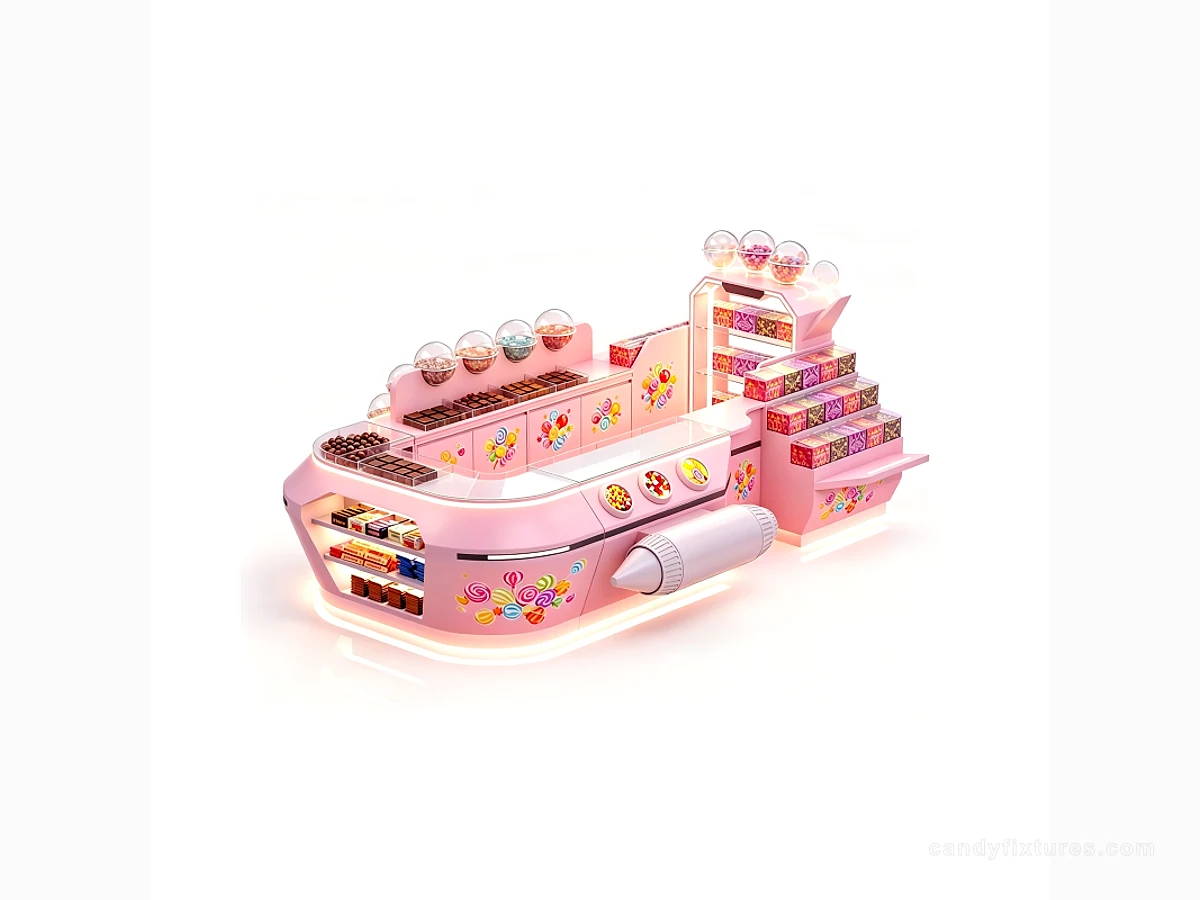 Candy Boat Kiosk Pink Candy Counter Sweet Retail Store Bar Candy Spaceship Display
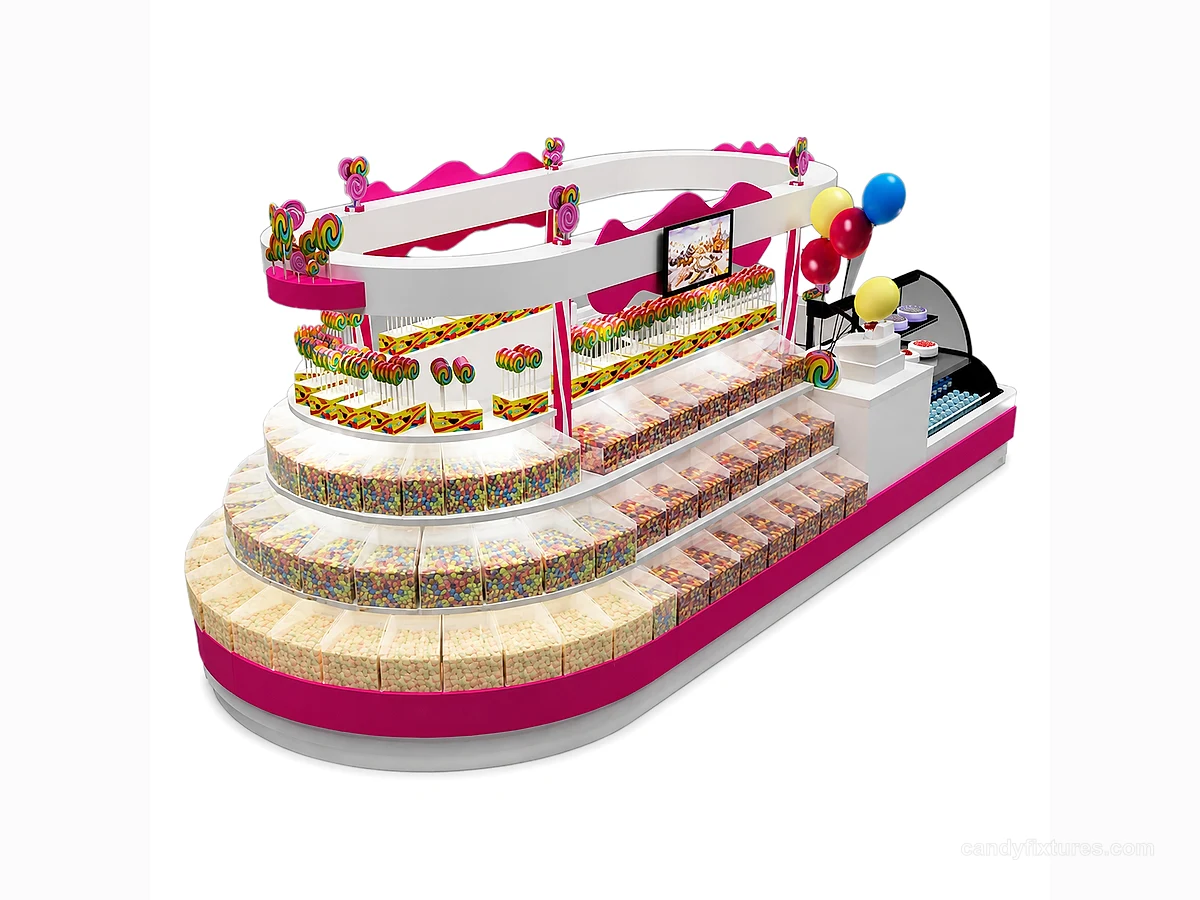 Boat Shape High-end Shopping Mall Candy & Ice Cream Kiosk CustomCandy store layout guideReview the customer and staff routes before fixing the station.Candy dispensers for retail storesContinue with gravity dispensers and service routines.
Frequently asked questions
What are the best bins for a bulk candy store?
The best choice depends on the product texture, serving method, cleaning routine and store layout. Clear scoop bins, gravity dispensers, lidded containers and modular bin racks can all work when the customer and staff actions are planned together.
How should I keep bulk candy bins hygienic?
Create a local-compliance cleaning and food-handling routine for containers, scoops, labels and surrounding surfaces. Plan replacement utensils, damaged-product handling and refill access before the station is fabricated.
Where should bulk candy bins be placed?
Place them where customers can browse and be supervised without blocking the entrance, main aisle or checkout queue. Keep a separate staff route for refilling and cleaning whenever possible.
Should I use wall-mounted or freestanding candy bins?
Wall-mounted bins save floor space and create a strong visual wall. Freestanding systems can be approached from more directions and may support a central feature. The choice depends on circulation, refill access and the store's available wall length.
Sources and further reading
- U.S. Food and Drug Administration — FDA Food CodeUsed for the recommendation to confirm local retail food-handling and cleaning requirements.
- FDA — Retail Food ProtectionUsed as neutral background for retail food protection planning.
- ADA.gov — 2010 ADA Standards for Accessible DesignUsed for the recommendation to protect accessible routes around the station.
Regulatory requirements vary by location. Confirm the final layout, food handling and accessibility requirements with the relevant local professionals before construction or opening.