
Retail Stockout Management for Candy Stores: Verify Gaps and Offer Clear Alternatives

Handle candy-shop stockouts with a shelf-to-reserve check, accurate customer information, approved alternatives and a recovery record that separates causes from guesses.
Treat the empty shelf as a question to verify
Retail stockout management starts by confirming whether a product is unavailable to customers, then identifying the next practical action. In a candy store, an empty facing may mean stock is elsewhere, a display label is wrong, a delivery is delayed or the exact item has sold out. Check the product identity, shelf and reserve location before promising a replacement date. Give customers accurate choices and keep an accountable record until availability has been restored or the range decision has changed.
This procedure handles the exception after a gap is noticed. It complements regular replenishment, assortment planning and inventory counting without replacing them. The immediate priorities are honest availability information, appropriate product handling and a workable recovery action. Avoid filling a labeled gap with a similar-looking item merely to make the display appear full. Differences in size, ingredients or price may matter to the customer even when two packages share a color.
Choose one product identifier and one selling location for the first investigation. Record when the gap was observed and who owns the follow-up. Distinguish a shelf gap from complete shop unavailability: stock may exist in a delivery area, a reserve cabinet or another approved selling position. Do not describe a product as available online or at the counter until the relevant stock has actually been verified for the service being offered.
Check identity, reserve stock and saleable condition
Start with the shelf label and the exact variant, pack size and product code. Inspect nearby facings for misplaced packs and check the approved reserve location. Review the latest receiving or transfer record when stock may have arrived without reaching the shelf. Keep the search focused and record what was checked. An inventory-system quantity is useful evidence, but it does not prove that the goods can presently be found and sold.
When stock is located, follow the shop's normal assessment and replenishment procedure. Goods on hold, damaged packs or items awaiting an approved product decision are not available simply because they are physically in the building. Do not move questionable stock into a customer-facing bin to close a visible gap. The FDA Food Code is a US model reference for retail food controls; actual requirements depend on local adoption and the shop's activity. Apply the approved local process and manufacturer instructions.
For loose candy, verify the actual product and its intended container information before any refill. Do not mix unidentified remnants or substitute another product under the existing label. For packaged products, confirm the same code rather than relying on packaging color. If the gap comes from an incorrect stock record, preserve the finding and route the adjustment through the authorized process. A corrected shelf does not by itself resolve an inaccurate inventory balance.

Classify the gap without guessing the cause
Use a short set of working states: stock found away from the shelf, stock unavailable pending assessment, confirmed shop stockout, delivery not yet received or identity unresolved. These states describe what is currently known. Keep the underlying cause separate until evidence supports it. 'Demand was higher than expected' requires a comparison with the actual plan and sales pattern; an empty bin alone cannot distinguish demand from a missed refill or an incorrect record.
Assign an action and owner to each state. Stock found in reserve needs an approved refill and a check of why the shelf stayed empty. A missing delivery needs confirmation against the supplier's agreed terms and current information. A product hold requires the designated assessment route. Unresolved identity needs clarification before any substitution. This prevents several employees from conducting the same search while the customer's question remains unanswered at the counter.
Use operational priorities rather than a universal rule that every empty facing is urgent. Consider whether the product was specifically promised, supports an active promotion or has an acceptable alternative. Keep product safety and truthful information independent of commercial importance. The shop can choose to prioritize a fast-selling line, but it cannot make an unsupported delivery promise or release held goods because a high-value customer is waiting. Record the next check point for unresolved cases.
| Observed state | Check before acting | Next action |
|---|---|---|
| Empty facing, reserve stock found | Exact identity and approved saleable condition | Refill and investigate the missed shelf task |
| System shows stock, none found | Location, receipts and transfer records | Assign search and authorized record review |
| Goods on hold | Responsible assessment process | Keep unavailable until approved release |
| Delivery outstanding | Order acknowledgment and current estimate | Update owner and customer information |
| Exact item sold out | Alternative product information and price | Offer a clearly explained customer choice |
| Range discontinued | Approved assortment decision | Reset labels and close with the range decision |
Give customers a clear, limited explanation
Tell the customer what is confirmed: the exact item is unavailable now, stock is being checked or a supplier date has not yet been confirmed. Avoid giving a speculative arrival day as if it were guaranteed. If the business offers a notification service, describe what the notification means and collect information only through the approved process. Do not promise to reserve stock unless the shop has a reservation procedure that can actually honor the commitment.
Offer alternatives by relevant characteristics, such as pack format, flavor preference or budget, while explaining meaningful differences. Never promise equivalent allergen suitability based on appearance or a staff member's recollection. Give access to the current product information and follow the shop's approved approach to ingredient questions. An alternative should be a transparent choice for the customer, not a disguised substitution designed to protect the sale. Accept that the customer may prefer to wait or leave.
Keep the checkout and display information consistent. Remove or amend claims that no longer describe the offer through the authorized process. If an online listing shows local availability, ask the responsible person to correct it rather than allowing the counter team to explain the same mismatch repeatedly. Record whether a customer accepted an alternative, asked for follow-up or declined. Avoid unnecessary names and personal details in the general stockout log; record demand observations separately from customer contact records.
Manage the display while the item is unavailable
Keep the empty location understandable and safe to shop. Depending on the store's approved merchandising approach, use a clear temporary notice, reduce the facing or reset the area with an accurately labeled alternative. Do not let a sign imply that stock is imminent when no date is confirmed. If prices or product information change, check the entire offer together. A shelf that looks complete but sends the wrong product information creates a second problem rather than solving the first.
Preserve the intended access and handling arrangements. Do not stack extra packs beyond an approved shelf setup or block a service surface to compensate for a gap elsewhere. An existing storage-backed shelf may help organize identified reserve packs; it does not create additional supply or prove that the stock record is correct. Check actual usable dimensions and the supplied unit's limits before changing a fixture arrangement. Product photographs illustrate form, not tested capacity or food-contact suitability.
When comparing a display rack, counter and reserve cabinet, map where the identified goods wait and who moves them to sale. A product can be in stock yet unavailable to shoppers if it is hidden behind an unrelated service task. Observe the route before purchasing more furniture. A clearer location label or assigned refill responsibility may solve the problem with the existing fixtures. Retain a record of any temporary display change so the original plan can be restored deliberately.
Confirm the recovery route and its dependencies
For a confirmed stockout, check open orders, supplier availability and the business's approved reorder decision. Separate an order request, supplier acknowledgment, dispatch and received saleable stock. Each is a different state. Communicate only the level of certainty supported by the current evidence. If a delivery estimate changes, update the assigned owner and any customer commitments through the approved channel. Do not quietly change the log so it appears that the earlier promise was always correct.
Consider the recovery quantity in the context of demand and remaining shelf life, rather than ordering a large amount to prevent embarrassment. Distinguish normal demand, a short-lived promotion and a one-off bulk request. Coordinate with the assortment and replenishment process for the actual order calculation. This exception log does not prescribe a universal safety-stock formula. If the data is incomplete, record the limitation and choose a review point instead of presenting an unsupported forecast as a precise requirement.
For an illustrative event, a shelf gap is discovered on Monday, reserve stock is checked and the supplier confirms an expected Wednesday delivery. The shop records Wednesday as an estimate, not restored availability. If the goods arrive Thursday but remain on hold, the event stays open until the approved sale decision and shelf refill occur. These days are an example sequence, not a recommended service level. Record both the cause information and the actual moment customers can obtain the correct product again.
Close the event with evidence of restored availability
Close the immediate event only when the correct product is saleable and accessible in the intended location, or when an approved range change has replaced the recovery plan. Check the shelf label, physical stock and any customer-facing availability system together. Confirm that an online reservation or notification promise has been handled as agreed. A delivery receipt alone is insufficient if the goods are still in an inaccessible holding area or the listing remains inaccurate.
Retain the original observation, checks, action owner, changed estimates and closing evidence. Keep stock-record corrections linked to the authorized adjustment, and supplier issues linked to the appropriate order reference. If collecting personal information for customer notifications, the UK's ICO data-minimisation guidance provides an official reference for limiting information to its purpose. Check the rules governing your own shop and service providers. A general availability review rarely needs customers' full contact details to identify a recurring product gap.
Review repeated events by product, location and confirmed cause. Separate missed refills from late supply, record errors and deliberate range changes. Avoid estimating lost sales by simply multiplying an empty-shelf duration by an assumed hourly rate. Customers may switch products, return later or leave; those outcomes need evidence. Test one relevant change, such as clearer reserve locations or a revised escalation point, and check whether verified shelf gaps become less frequent without creating excess stock or handling problems.
Related products and planning pages
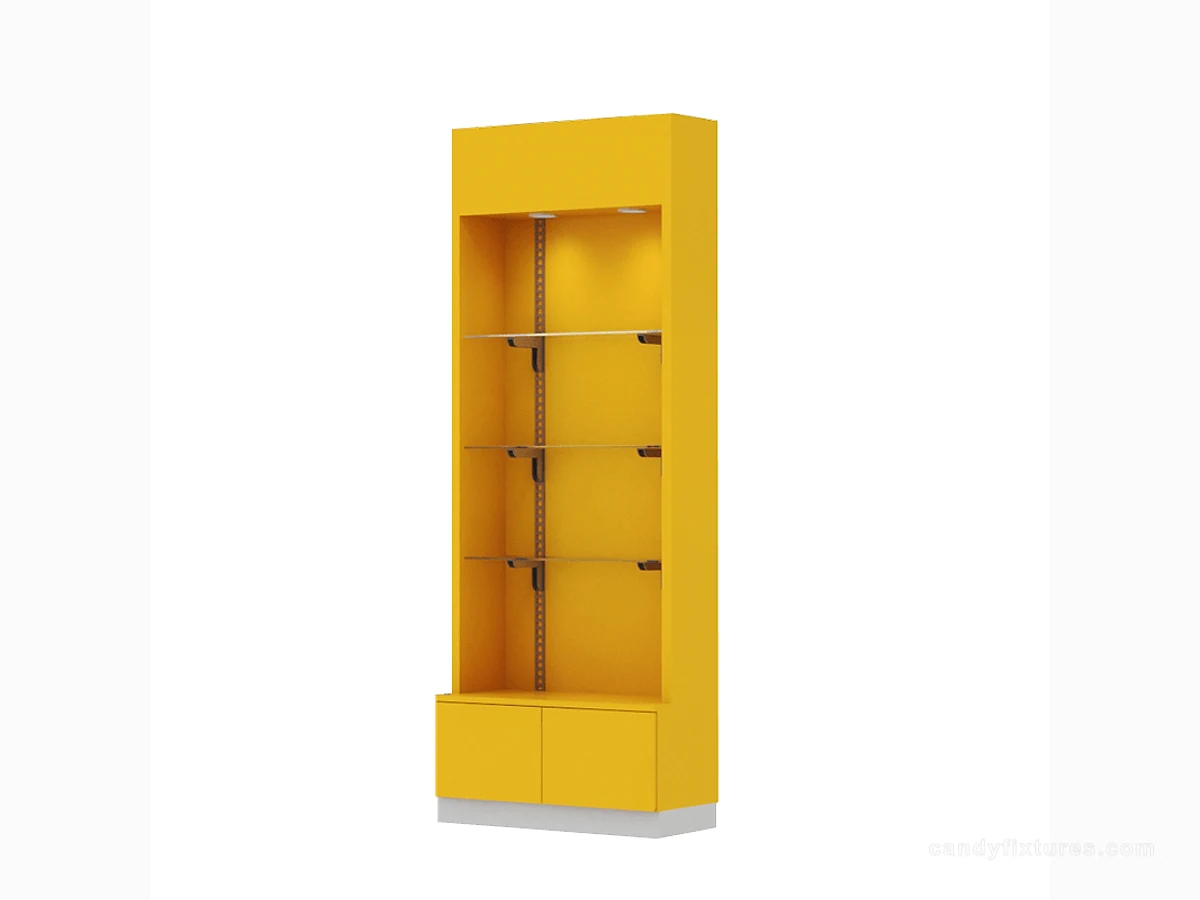
Layered Candy Gift Display with Base StorageYellow Shelf Cabinet with Clear PanelsWhite L-Shaped Checkout Counter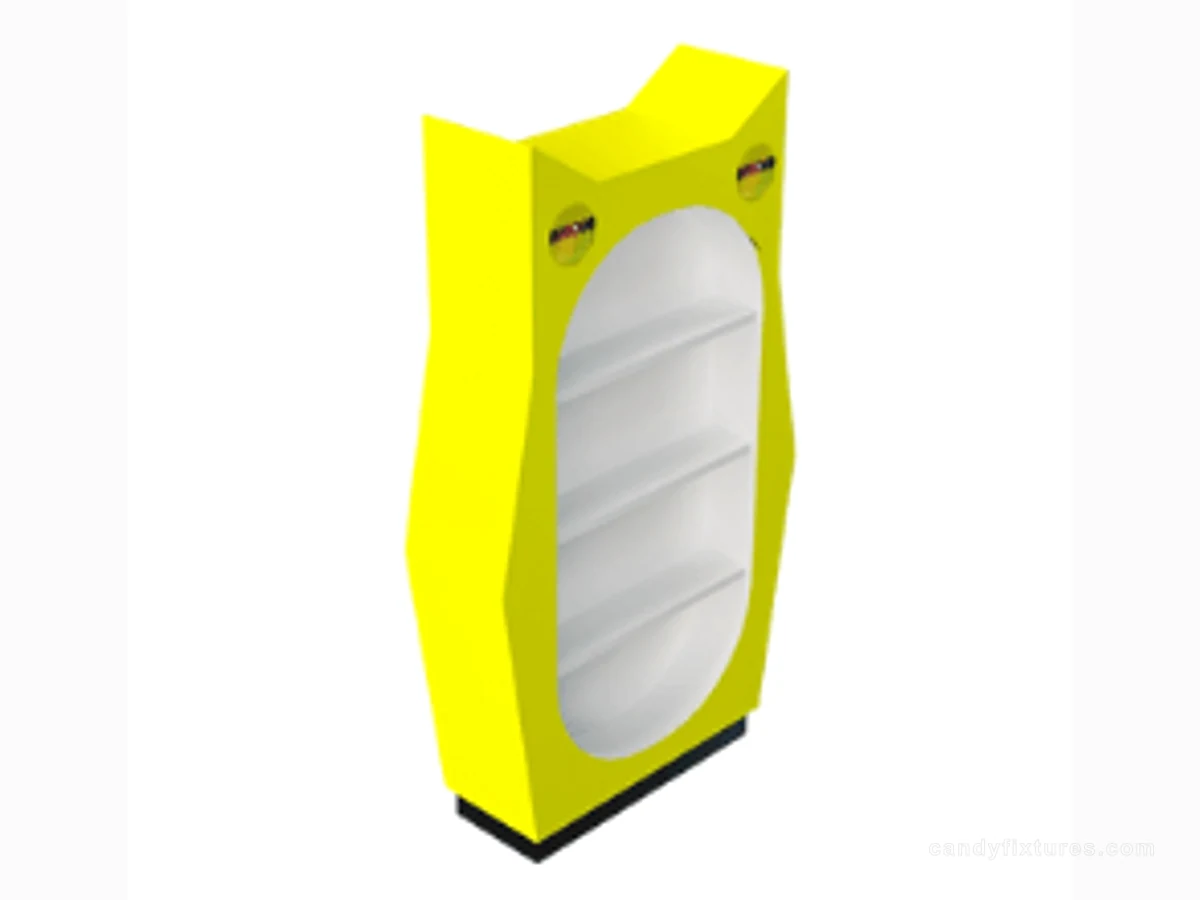 Yellow Framed Display with Oval OpeningCandy Store Replenishment: Follow a Carton to the ShelfContinue with this complementary shop-planning guide.Candy Inventory Management: Connect Locations, Units and ReordersContinue with this complementary shop-planning guide.Candy Assortment Planning: Give Every Range a Shelf RoleContinue with this complementary shop-planning guide.Candy Store FixturesCompare display, counter and storage arrangements.
Frequently asked questions
Does an inventory-system balance prove the candy is available?
No. Locate the exact product, confirm its saleable condition and check whether customers can obtain it through the advertised service.
Can a similar product fill the empty bin under the old label?
Do not disguise a substitution. Verify product identity, ingredient information and price, and change the display through the approved process.
When is a stockout resolved?
When the correct saleable goods are accessible and availability information is correct, or an approved range decision has formally replaced the recovery plan.
Should staff give the supplier estimate as a guaranteed arrival date?
No. Distinguish an estimate from confirmed receipt and restored availability. Update commitments when evidence changes.
Sources and further reading
- FDA — Food CodeUS model retail food reference; actual local adoption and approved product controls govern the shop.
- ICO — Data minimisationUK official guidance relevant to limiting customer-notification information; check the requirements applying to your shop.
Use the linked material as background. The accepted product information, equipment instructions and requirements applicable to your location determine the final operating and installation decisions.