
Candy Store Lighting and Signage: Test the Smallest Important Information
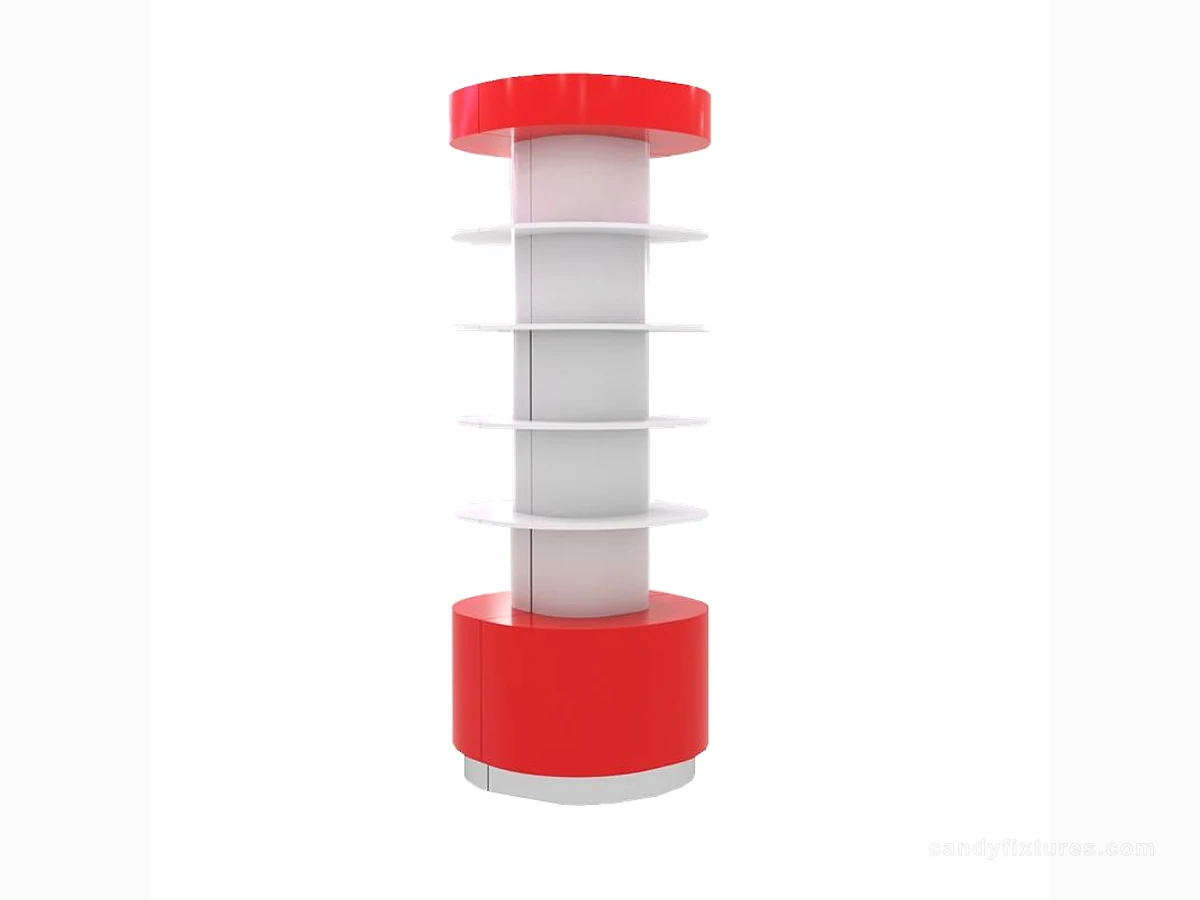
Bright displays do not automatically make prices and product information readable. Review the light, surface and label as one arrangement.
Start with the decision
Place real wrappers and the smallest intended label on a finish sample. View them from the customer's approach, including reflections from glass or clear bins and shadows from upper shelves.
Work through the details
Separate general illumination, product emphasis and decorative lighting in the brief. Coordinate power, service access and any sign fixings with the responsible installers rather than concealing them after cabinetry is made.
A planning example
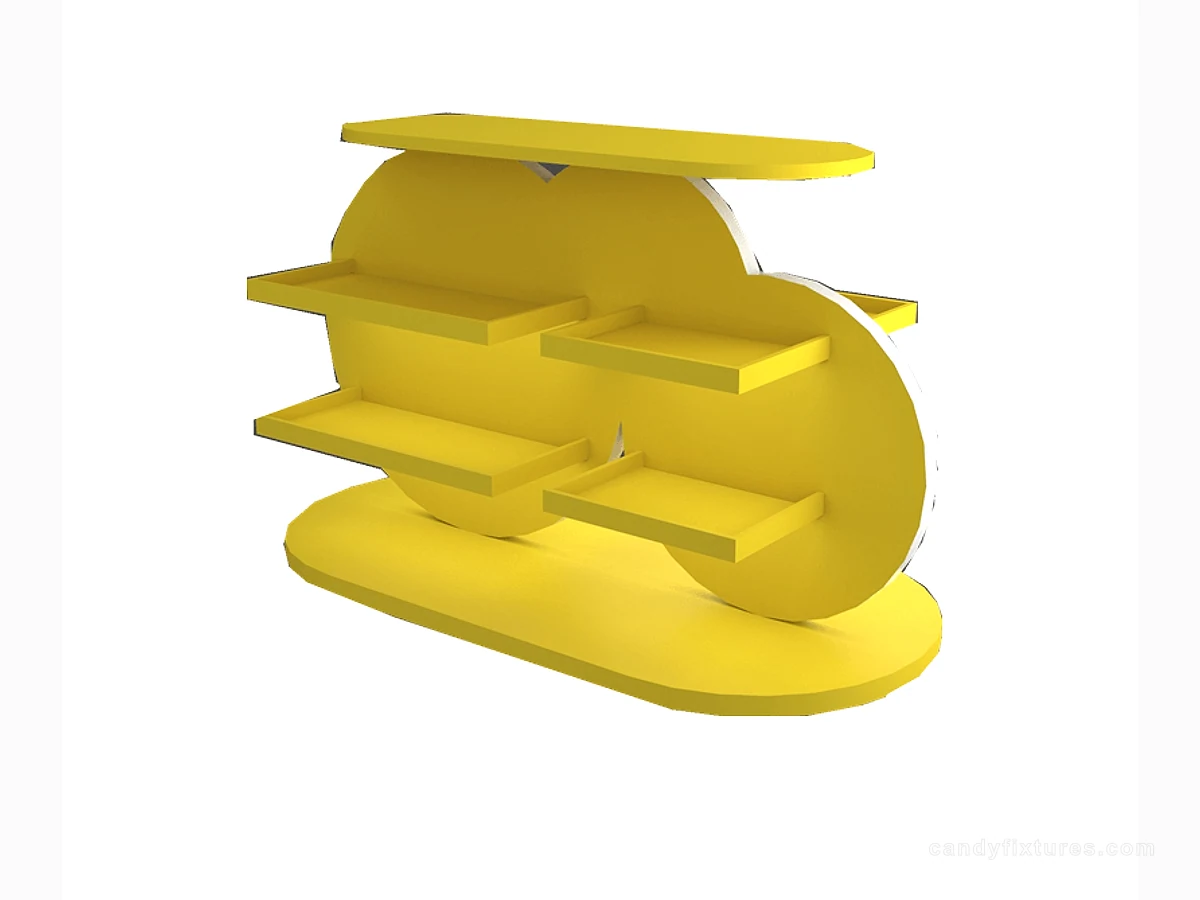
A glossy purple shelf reflects a price label's light background. Test the real label at the normal viewing angle and adjust its position or holder before adding another bright light strip. More light can increase glare when the surface and angle remain unchanged.
Check it in the shop
Test the shop sign at the actual approach distance and the shelf label at browsing distance. Adjust contrast and position before adding more light, then keep replacement parts and maintenance access documented.
Related products and planning pages
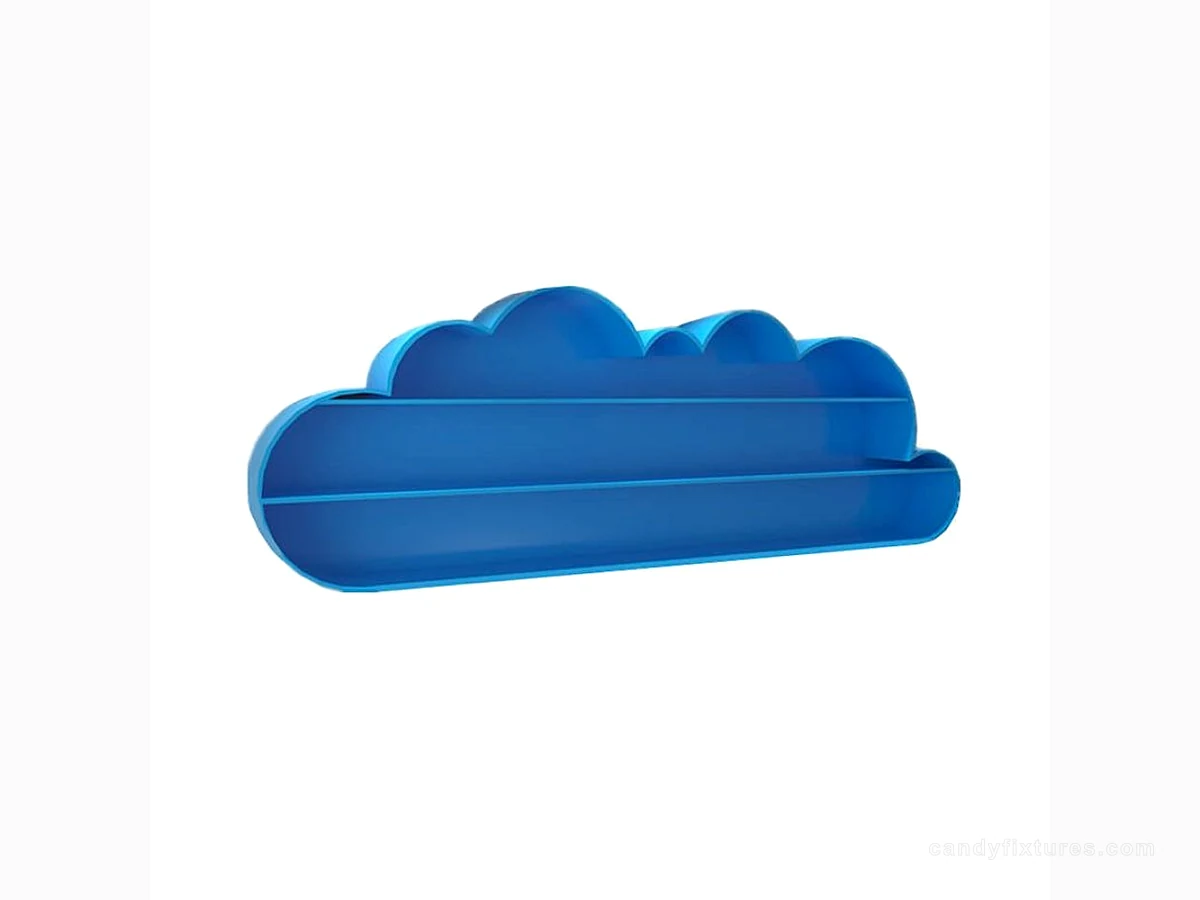
Round Column-Wrap Shelf ReferenceBlue Cloud Wall Display Shelf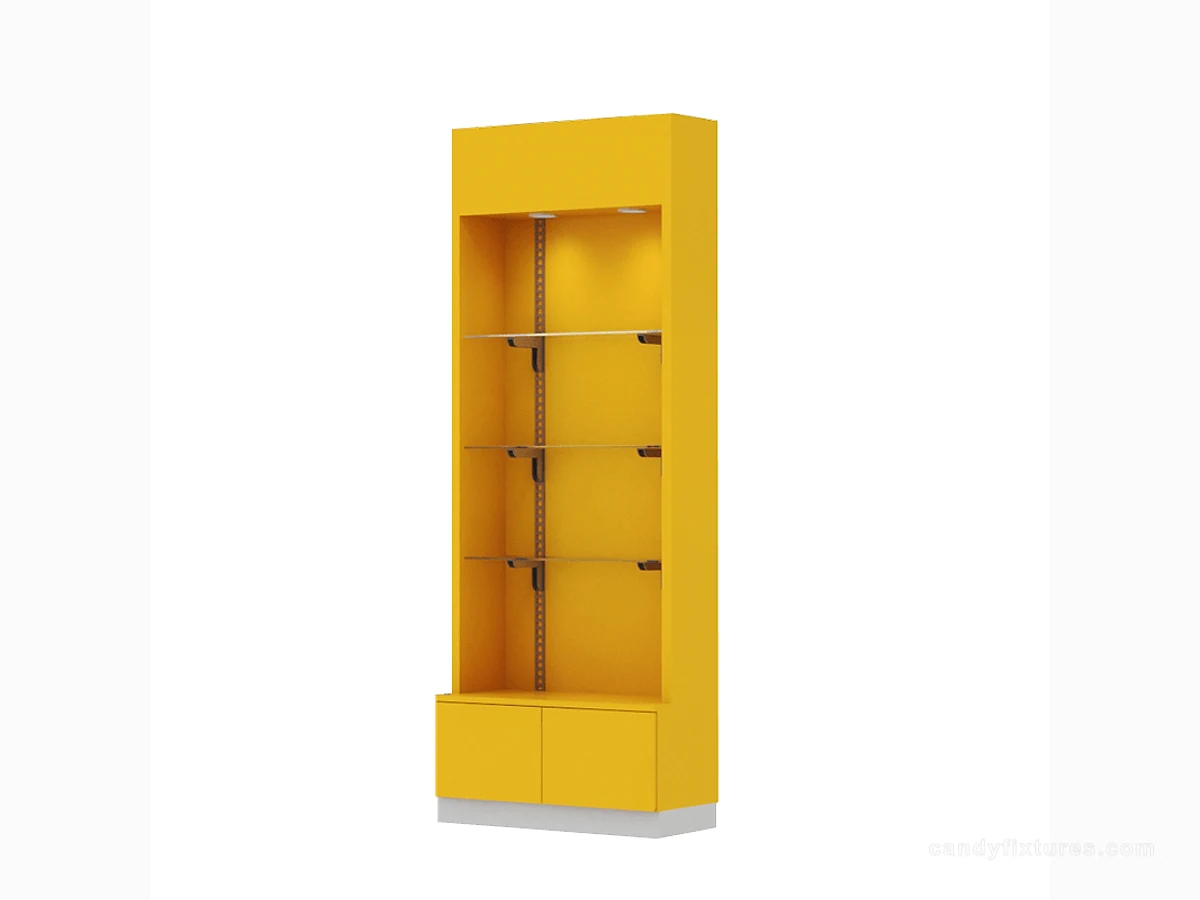 Yellow Shelf Cabinet with Clear Panels
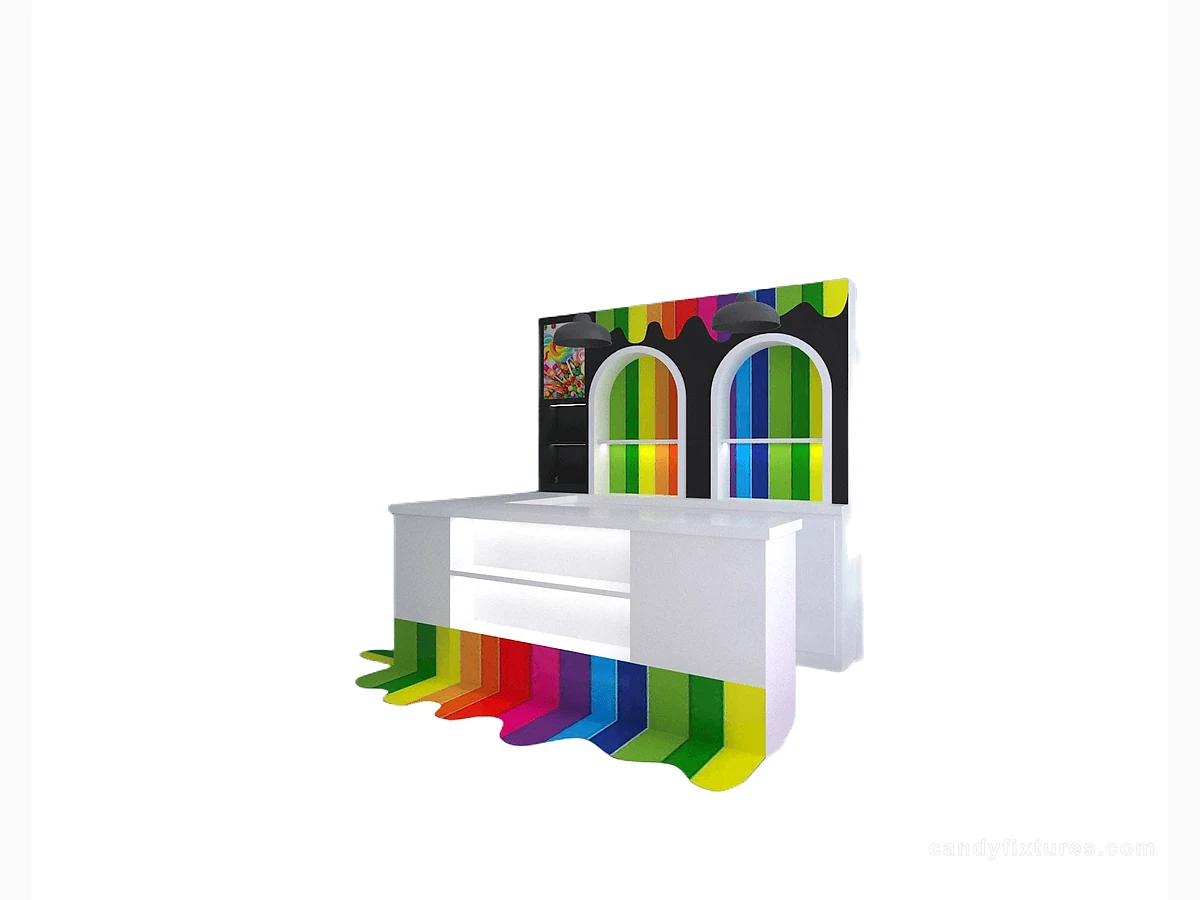 White L-Shaped Checkout CounterCandy wall displaysBrowse other wall display formats.Candy store merchandising guidePlan which product group each display should carry.Candy store layout guideCheck customer sightlines and the walking route.
Frequently asked questions
Can lighting maintenance be left until installation?
Include power, access and replacement arrangements in the approved fixture design and installation scope.
Sources and further reading
- U.S. Department of Energy — Energy-efficient commercial LED luminairesBackground reference retained for further reading. Check the requirements applicable to your product and location.
- U.S. Department of Energy — Purchasing energy-efficient light bulbsBackground reference retained for further reading. Check the requirements applicable to your product and location.
- U.S. Access Board — Chapter 2: New ConstructionBackground reference retained for further reading. Check the requirements applicable to your product and location.
Use the linked material as background. The accepted product information, equipment instructions and requirements applicable to your location determine the final operating and installation decisions.