
Candy Store Pest Prevention: Inspect Stock, Clean Display Gaps and Act on Evidence
Build a practical pest-prevention routine around incoming candy, display gaps, reserve storage and documented follow-up, with clear boundaries for professional treatment.
Make prevention part of display operation
Candy store pest prevention starts with denying pests access to food, water and hiding places, then checking whether those measures are working. A useful routine connects incoming deliveries, retail displays, reserve stock, waste handling and building maintenance. It is not simply a scheduled spray or a promise that a particular cabinet is pest-proof. Assign an owner to observations and follow-up so that a sticky spill, damaged pack or recurring gap is acted on before it becomes a larger problem.
The US Environmental Protection Agency recommends prevention first in its pest-control guidance and describes removing sources of food, water and shelter. Adapt that principle to the shop's actual handling model. A packaged-gift display and an open bulk-candy station have different access and cleaning needs. Follow applicable local food rules, supplier instructions and the advice of qualified pest-management professionals rather than applying household advice directly to a commercial food display.
Write down the areas included in the routine. Cover sales fixtures, base storage, unpacking points, refuse areas and the routes between them. Mark locations on a simple plan so that observations can be compared over time. The objective is a repeatable inspection and response system, not a claim that the store can eliminate every possible pest or determine the cause of activity from one photograph.
Check deliveries before they join saleable stock
Choose a receiving point with enough light and space to examine the outer packaging and the product packs that are reasonably accessible. Look for damage, unexpected residue or other signs that need investigation. Record the supplier, delivery reference, product identity and affected quantity when a concern is found. Do not infer that an entire consignment is safe or unsafe solely from the condition of one carton; follow the store's hold and assessment procedure.
Keep suspect stock identified and separate from normal sale or replenishment while the responsible manager obtains advice. Retain relevant packaging and traceability details where appropriate, without spreading loose material through the shop. Contact the supplier with specific evidence and arrange professional assessment when necessary. Do not brush away signs, repackage the product and place it on a shelf to avoid a stock gap. The decision to release, return or discard food needs an appropriate basis.
Organize accepted deliveries so they do not disappear behind older reserve stock. Use stock rotation and an accessible layout to make inspection possible. Keep the receiving decision distinct from the shelf-life or recall decision: a product can need attention for more than one reason. Staff should know which record to open and whom to contact, instead of using a single vague damaged-goods label for every exception.


Design a cleaning route around the actual fixtures
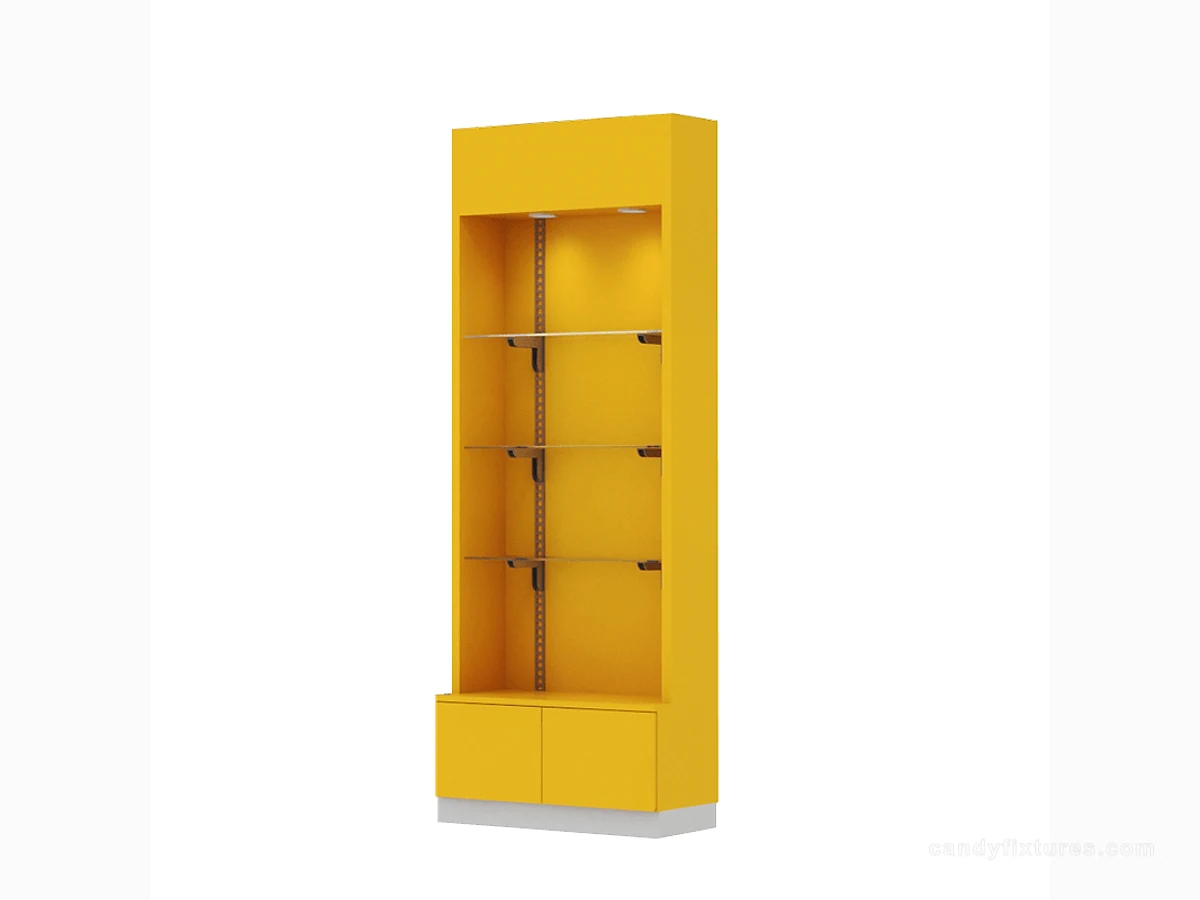
Walk the display with the person who cleans it. Identify areas beneath containers, behind removable merchandising accessories and inside permitted storage compartments. Record what can be safely moved by trained staff and what requires supplier or installer involvement. A cabinet photo shows its general form, not the cleaning access, seal integrity or suitability of every surface. Confirm those details for the supplied configuration and the products being handled.
Separate routine spill removal from more involved cleaning. A small quantity of sticky candy residue can remain unnoticed around a scoop holder or beneath an arrangement of gift boxes if the checklist only says wipe the counter. Name the location and the task, then follow the relevant surface and food-contact cleaning instructions. Do not prescribe an unverified chemical concentration or mix cleaning products to compensate for an awkward access point.
Arrange the work so food, packaging and utensils are protected from contamination. Remove or protect items as appropriate before cleaning and allow surfaces to be ready for their intended use before restocking. The FDA Food Code provides a model for retail food practices in the United States, with adoption and local requirements varying. Use it as a source to discuss with the relevant authority, not as proof that a product photograph establishes food-contact compliance.
Reduce hidden food, water and shelter
Keep reserve storage orderly enough to see and reach the relevant inspection points. Avoid using the empty space behind a cabinet as an informal store for cartons and redundant display props. Give packaging supplies a defined location and remove unnecessary accumulation through the agreed waste process. Any decision to reposition a cabinet must respect its installation requirements and be handled by suitable people; inspection access is not a reason to disturb anchorage or alter a load-bearing arrangement.
Report water leaks, condensation concerns and building gaps through the appropriate maintenance contact. Staff can describe the location and observed condition, but should not seal ventilation openings or modify services without review. The correct remedy depends on the building and the source of the problem. Coordinate with a landlord or facilities manager where responsibility is shared, and keep the issue open until the responsible person confirms the work and its effect.
Manage food waste and contaminated packaging through the store's documented process. Keep waste containers suitable for their use, address spills promptly and avoid leaving exposed residues overnight. The EPA's prevention guidance includes storing food in sealed containers and controlling garbage and water sources. Container suitability still needs confirmation for the actual food and operation; an ordinary decorative jar or furniture compartment is not automatically a sealed food-storage system.
Record observations without guessing at treatment
Use a log that captures the location, date, observation, photograph where useful, immediate action and assigned follow-up. Describe what was seen rather than inventing a pest identification or infestation level. A staff member may report a small insect near a reserve carton; the qualified professional should determine identification and the appropriate management response. Repeated activity at one location is a reason for investigation, even if the area looked clear at the previous visit.
If monitoring devices are used, have their type, placement and checking method agreed with the pest-management provider and applicable requirements. Do not move devices casually or place them where they could contaminate food or create another hazard. A clear result on one device does not certify that the store is pest-free. Compare observations with the wider pattern of stock condition, sanitation and building maintenance rather than relying on a single indicator.
Escalate suspected contamination promptly. Stop affected sale or handling as appropriate, protect other stock and obtain the manager's direction and qualified advice. Record the product identities and locations involved so that the decision can be traced. Keep food-disposition decisions separate from pest-treatment decisions: arranging a service visit does not by itself establish that exposed stock is suitable for sale or that an affected display can immediately reopen.
| Location | Observation to record | Follow-up to assign |
|---|---|---|
| Incoming stock | Pack damage, residue or suspected activity | Hold and obtain an appropriate assessment |
| Display surfaces | Spills and inaccessible cleaning points | Clean by approved method; review access |
| Base storage | Stock condition and accumulated packaging | Inspect, organize and remove unnecessary materials |
| Building interfaces | Observed gaps, leaks or moisture | Refer to responsible maintenance contact |
| Monitoring points | Device identity and actual observations | Report through the provider-agreed process |
| After service | Restrictions, instructions and unresolved causes | Confirm readiness before normal use |
Qualitative workflow based on EPA prevention guidance and retail-food hygiene principles; use local requirements and professional instructions for the actual shop.
Define the professional-treatment boundary
Do not improvise pesticide use around candy, food packaging or serving equipment. The EPA explains that pesticide labels carry directions and precautions and that users must follow them. A product intended for one setting should not be assumed suitable for a different indoor commercial food situation. Qualified providers should assess the problem and select permitted methods in accordance with the label and applicable requirements. Store staff need clear instructions about what must be removed, protected or kept out of use.
Before a planned visit, agree access, affected locations, stock protection and the person who will receive the service record. Ask for written instructions about any preparation, cleaning, restrictions and conditions for resuming normal use. Do not create a universal re-entry interval or cleaning rule in the shop checklist: those details depend on the actual method, product and directions. Where instructions are unclear, obtain clarification before returning the affected area to service.
After the visit, keep the treatment record linked to unresolved causes. A service action may address immediate activity while a damaged door seal or recurring spill remains. Assign responsibility for these supporting measures and verify completion. If activity continues, share the new observations with the provider instead of increasing chemical use independently. Prevention, monitoring and follow-up should inform one another, with the provider's assessment guiding changes to the management plan.
Recheck effectiveness and improve the daily routine
Build checks into the moments when staff already handle the display: receiving, replenishment, spill response and closing. Add deeper inspections at intervals appropriate to the operation and the provider's advice. Avoid a universal frequency that ignores exposed-food handling, seasonal stock changes or previous findings. The shift record should show what was actually inspected and any action required, rather than a row of ticks copied forward from the preceding day.
For example, a manager finds residue beneath a removable gift-display accessory during replenishment. Staff protect the merchandise, clean the accessible area using the approved method and record the location. A later check determines whether the residue has recurred. If it has, review the handling task and accessory placement instead of simply assigning more frequent wiping. This illustrative example concerns a process issue; it does not diagnose a pest or justify a treatment.
Review recurring findings with staff, the maintenance contact and the pest-management provider as appropriate. A difficult cleaning point may justify a better fixture brief for the next purchase, while a repeated receiving concern may need supplier action. Keep the formal record factual and proportionate. The useful outcome is a shop where people can identify conditions, protect food, obtain appropriate help and verify remedies without relying on a cabinet's appearance or an unsupported pest-proof claim.
Train new staff using the actual shop plan and a few factual examples of observations to report. Explain where to place stock awaiting assessment and how to reach the responsible manager. A short rehearsal is more useful than expecting a new employee to recognize every pest species or interpret a technical service report without support.
- Inspect deliveries and identify stock needing assessment.
- Remove residue with an appropriate documented cleaning method.
- Record location-specific observations and assign follow-up.
- Follow professional and label instructions for treatment and reopening.
Related products and planning pages
Yellow Shelf Cabinet with Clear PanelsWhite L-Shaped Checkout CounterLayered Candy Gift Display with Base Storage Yellow Framed Display with Oval OpeningCandy Store FixturesCompare display, counter and storage arrangements.Candy fixture planning guideConnect the operating requirement with the original store brief.Food-Safe Candy Displays: Specify the Contact Surface and Cleaning MethodContinue with this complementary practical guide.Candy Stock Rotation: Keep Product Identity through Refill and CleaningContinue with this complementary practical guide.Candy Store Closing Checklist: Make Exceptions Visible to the Next ShiftContinue with this complementary practical guide.
Frequently asked questions
Does a closed display cabinet make candy pest-proof?
No. A photograph or closed door does not establish a pest-proof enclosure. Confirm the actual configuration and combine appropriate food storage with cleaning, inspection and building maintenance.
Should staff spray a display when an insect is found?
Do not improvise pesticide treatment near food or packaging. Protect affected stock, report the observation and obtain qualified advice. Any product use must follow its label and applicable requirements.
How often should the shop check for pests?
Include relevant observations in receiving, replenishment and closing routines, with additional inspection and monitoring intervals based on the operation, findings and professional advice.
When can an affected display return to service?
Follow the relevant assessment, food-disposition decision and any professional treatment instructions. A completed service visit alone does not establish that stock or a display is ready for normal use.
Sources and further reading
- EPA — Do’s and Don’ts of Pest ControlPrevention measures and safe-use boundaries; adapt to commercial food operations with qualified advice.
- FDA — FDA Food CodeUS retail-food model; local adoption and requirements vary.
- EPA — Introduction to Pesticide LabelsLabel directions and precautions guide pesticide use; do not improvise treatment around food.
Use the linked material as background. The accepted product information, equipment instructions and requirements applicable to your location determine the final operating and installation decisions.