
Candy Corner Display: Check the Part Customers Cannot See
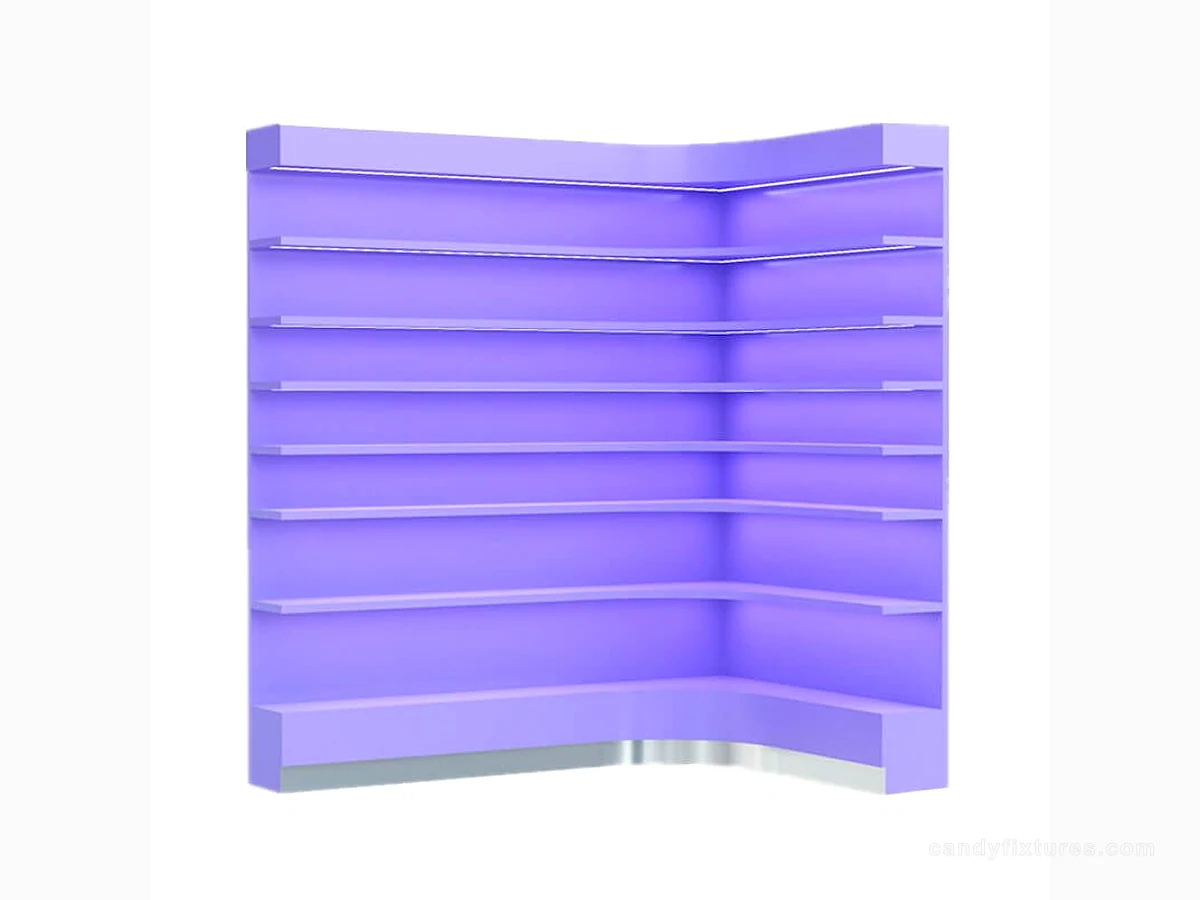
A curved or L-shaped cabinet can use an awkward corner, but extra depth at the joint may hide products and complicate refilling.
Start with the decision
Measure both walls and the corner angle. Place the largest pack on the inside shelf positions and test whether it remains visible from the normal approach.
Work through the details
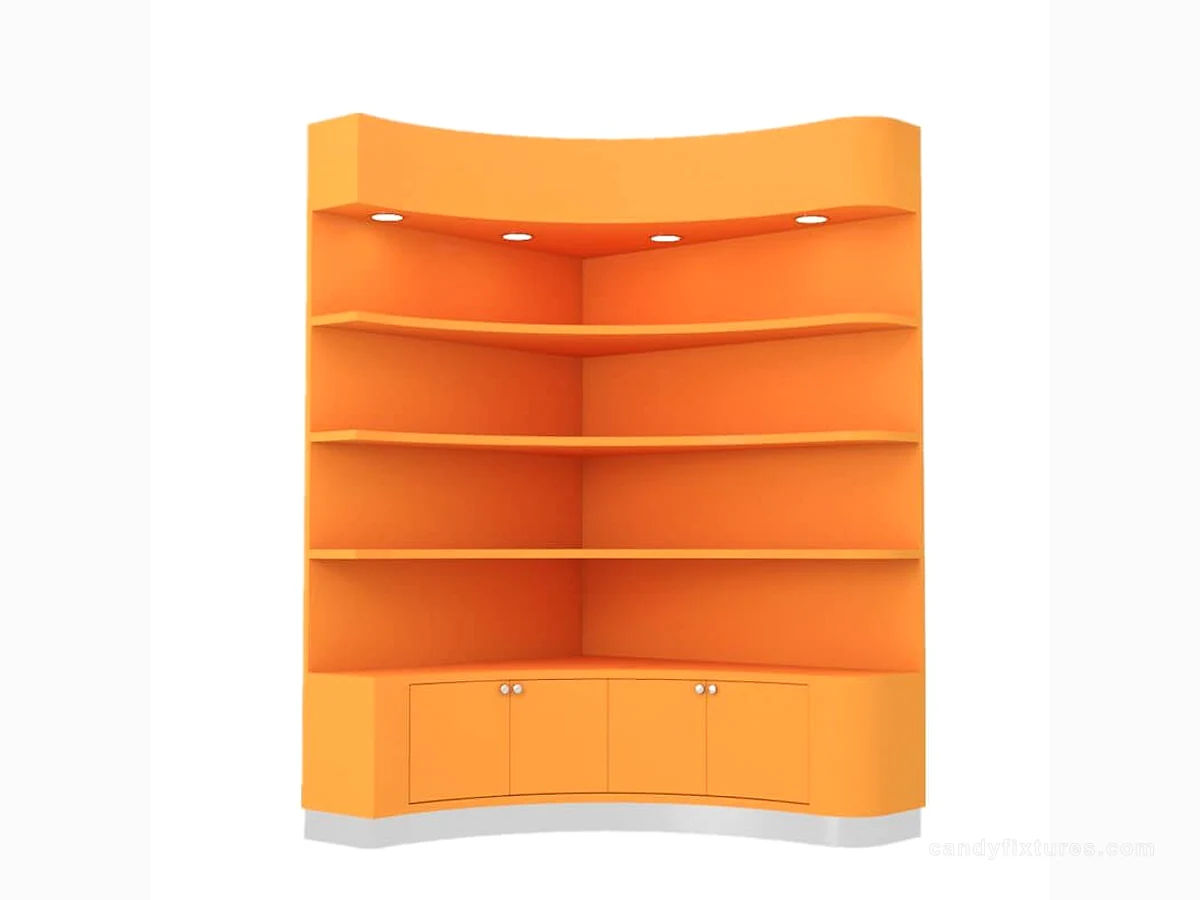
Compare a continuous curved unit with two shorter modules. Include open doors, labels and the staff hand when checking access rather than counting the full corner volume as usable stock space.
A planning example
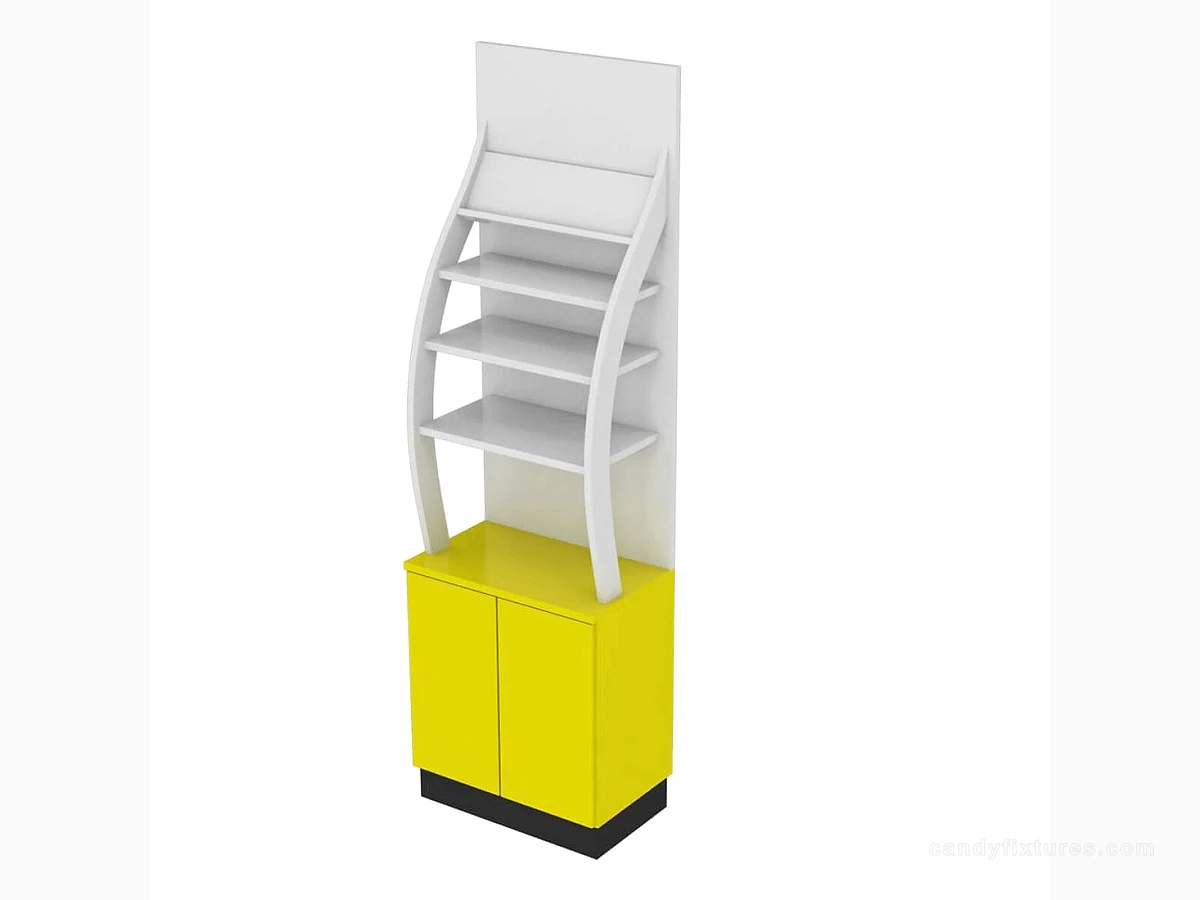
A curved corner shelf looks deep on plan, but a customer sees only the front packs. Trial the furthest position and compare whether a shallower curved face or two shorter units gives clearer access. Count useful facings rather than the hidden geometric volume.
Check it in the shop
Trial the last portion or last box in the deepest position. Keep the join cleanable and confirm wall fixing, service access and module delivery before approving the decorative outline.
Related products and planning pages
Purple L-Shaped Candy Wall ShelvingOrange Curved Wall Shelving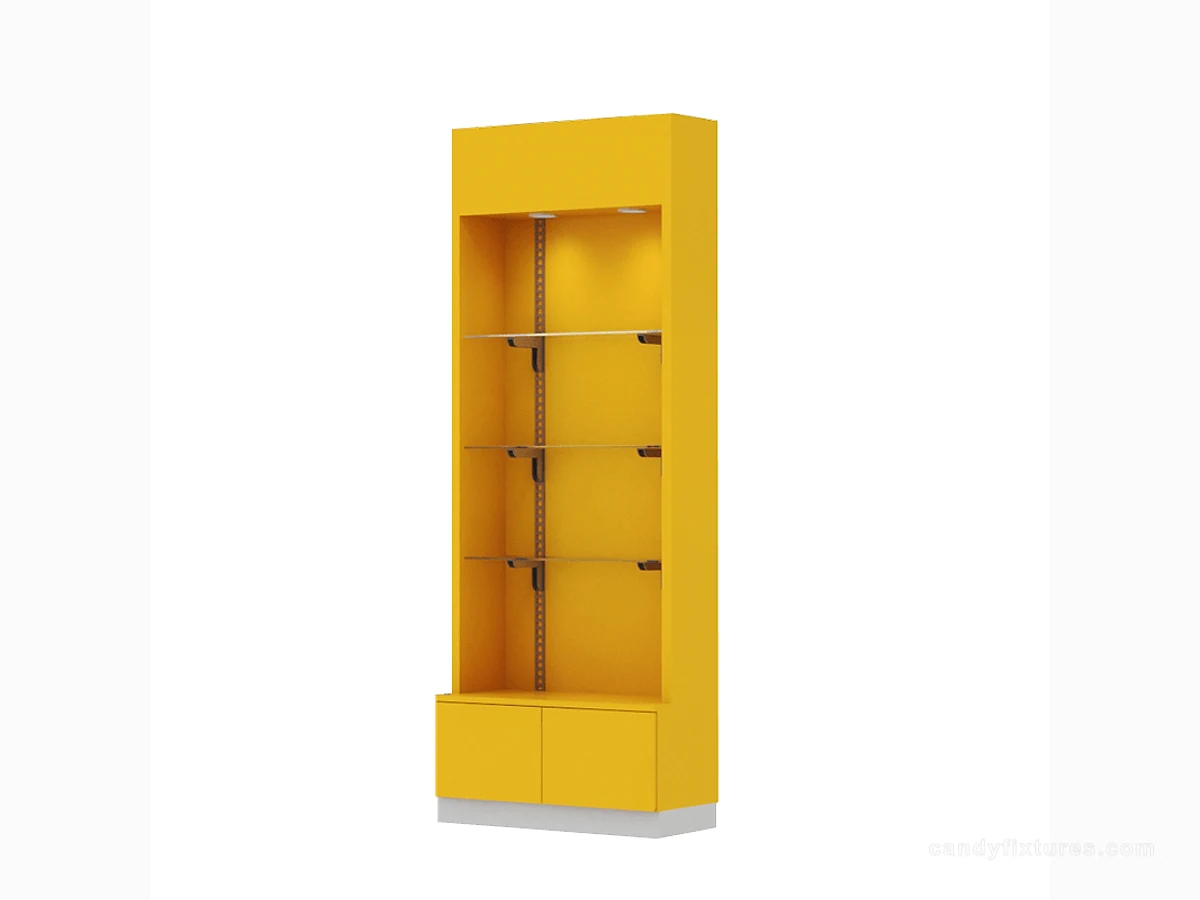 Yellow Shelf Cabinet with Clear Panels
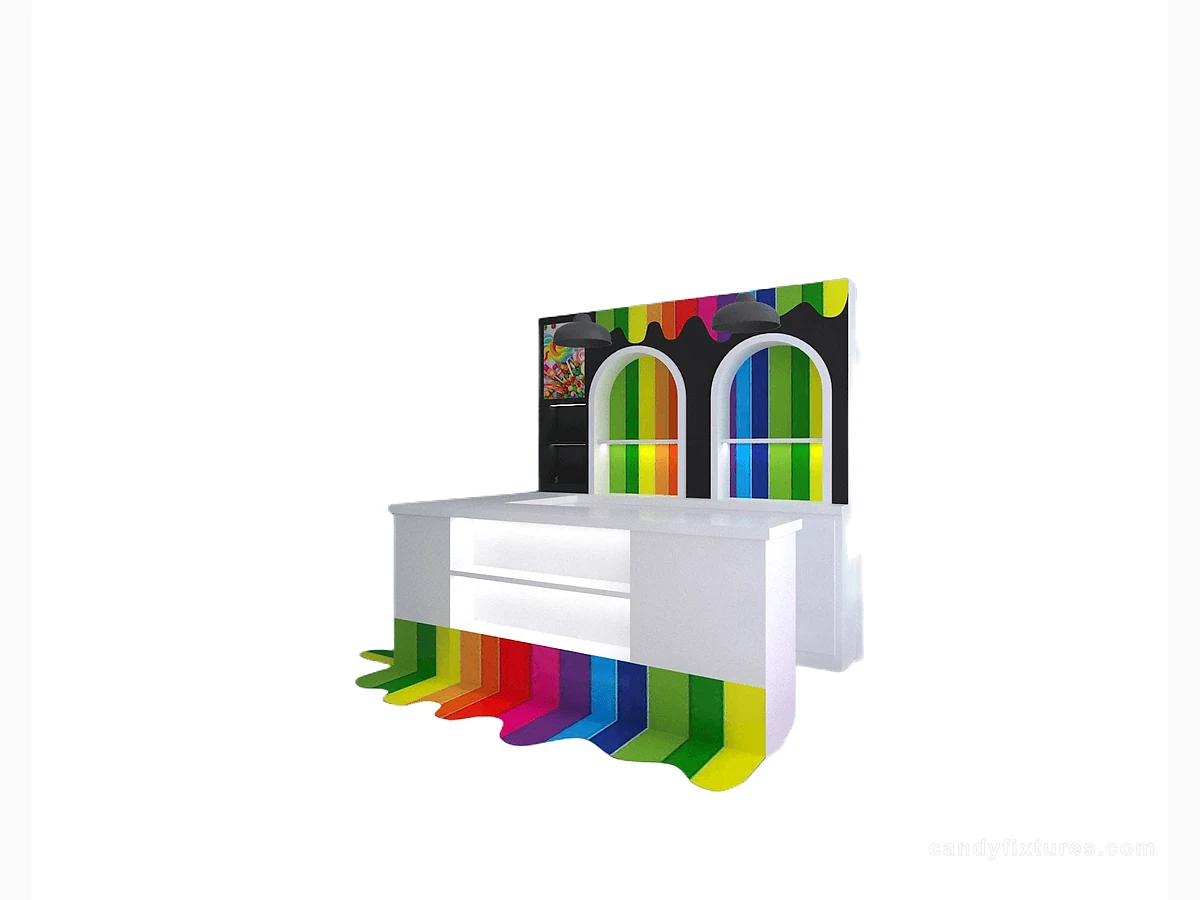 White L-Shaped Checkout CounterCandy Display CabinetsBrowse related fixture formats.Candy Store Layout: How to Plan Customer Flow, Displays and Back-of-House SpaceDevelop this decision alongside the related practical guide.Candy Store Wall Display: Plan Shelves, Product Access and ReplenishmentDevelop this decision alongside the related practical guide.Candy Store Operations: Build a Simple Inventory and Replenishment RoutineDevelop this decision alongside the related practical guide.
Frequently asked questions
Should the inside corner carry the fastest-selling range?
Choose the location from visibility and refill access. A difficult corner may be better left for a different, accessible use.
Sources and further reading
- U.S. Access Board — Accessible routesBackground reference retained for further reading. Check the requirements applicable to your product and location.
- FDA Food CodeBackground reference retained for further reading. Check the requirements applicable to your product and location.
- FDA — Have Food Allergies? Read the LabelBackground reference retained for further reading. Check the requirements applicable to your product and location.
Use the linked material as background. The accepted product information, equipment instructions and requirements applicable to your location determine the final operating and installation decisions.